Cypress Wood Flooring has more than 20 years behind its wood-flooring work in Buena Park, and a large share of the jobs we plan here sit in homes where the person paying for the floor is not the person living on it. That changes the first conversation. Before we talk about species, stain or sheen, we want to know who is in the unit, how long the work can take, and whether the floor is the whole project or one piece of a bigger one.
We refinish worn oak strip, replace damaged boards, rebuild floors after leaks and install new engineered or solid hardwood. For owners with tenants, the useful question is rarely which product to buy. It is whether the job can happen around the people living there, room by room, or whether it belongs inside a larger permitted remodel that another trade is leading.
This page walks through how we plan both kinds of work, what the city’s own tenant rules say about remodeling, and where we stop and point you to the people who answer the legal questions.
What Buena Park’s Tenant Rules Say About Remodeling
Chapter 8.60 and the H.E.L.P. page
The City Council adopted Ordinance No. 1721 on June 6, 2023, adding Chapter 8.60 to the municipal code. The city presents it on its Housing Eviction Legal Protections page, known as H.E.L.P., and describes it as offering greater renter protections than the California Tenant Protection Act, the statewide baseline. According to that page, the rules reach units where tenants have lived 12 months or more, or where one tenant has lived there 24 months or more.
The city page also lists exemptions, including units built within the last 15 years and single-family homes and condominiums that meet ownership and notice requirements. Whether a particular property is covered is a question for the city or a tenant advocate, not for a flooring crew. We mention the rule because it shapes how owners approach any project that might touch occupancy.
Cosmetic work versus a substantial remodel
The ordinance defines a substantial remodel as replacing or substantially modifying a structural, electrical, plumbing or mechanical system that requires a permit from a governmental agency, or abating hazardous materials such as lead-based paint, mold or asbestos. In either case the work must be something that cannot be done safely with the tenant in place and that requires the tenant to vacate for at least 30 days.
The same section is just as clear about what falls outside that definition. Cosmetic improvements alone, including painting, decorating and minor repairs, do not qualify, and neither does other work that can be performed safely without the tenant moving out. The ordinance never names floors one way or the other, so we never tell a client how a floor job would be classified. That determination belongs elsewhere.
Permits, scope and relocation
When an owner does end a tenancy to substantially remodel, the ordinance sets an order of operations. The owner must obtain all necessary permits before serving notice, and the notice must include copies of those permits, a description of the scope of work, and an explanation of why the work cannot happen with the tenant in place and requires at least 30 days of vacancy.
Relocation assistance for that kind of termination is the greater of $4,500 or two months of the tenant’s rent, paid within 15 calendar days. The city’s own summary page shortens this to two months’ rent, so we quote the ordinance’s words. The ordinance also allows a civil penalty of up to $15,000 for intentionally invalid remodel notices, which is one more reason these decisions deserve careful advice.
Looking for wood-flooring closer to Rossmoor? See Rossmoor Wood-Flooring.
Floor Work That Fits Around a Tenancy
Refinishing on a room-by-room plan
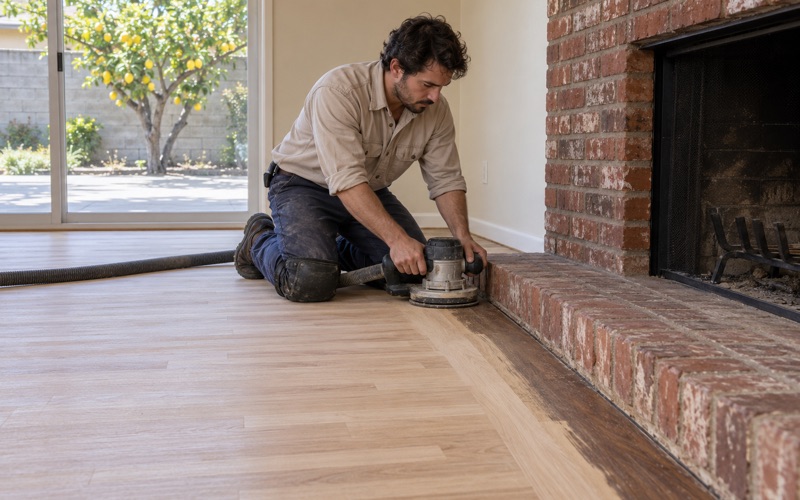
Most floor work in an occupied rental is sequencing, not demolition. A sand and refinish on oak strip can usually be split into zones, with furniture shifted into rooms we are not touching that day. Our dustless sanding system keeps fine dust down while the drum sander, edger and orbital sander work through the grit sequence, which matters when someone is cooking dinner two rooms away.
Every refinish comes with a written cure schedule showing when each room can take socks, then shoes, then furniture and rugs. Waterborne polyurethane generally lets a household return to a room sooner than an oil-modified product. Every finish we apply is chosen from products legal in the South Coast air basin under SCAQMD Rule 1113, which caps wood coatings at 275 g/L of volatile organic compounds.
Where a floor is sound but dull, a screen and recoat can refresh the wear surface in a day with far less disruption than a full sand. We check the existing finish first, since a recoat will not bond over some older products, and peeling polyurethane from an earlier recoat usually means the prior coat went down over contamination.
Board repair, soft spots and water damage
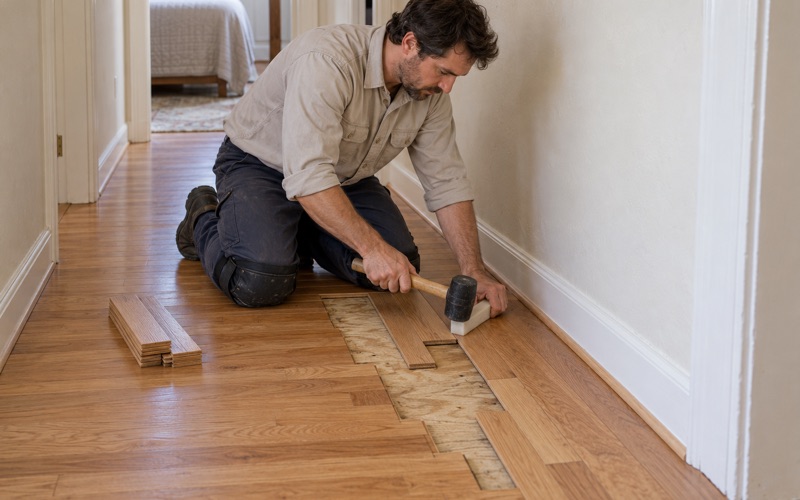
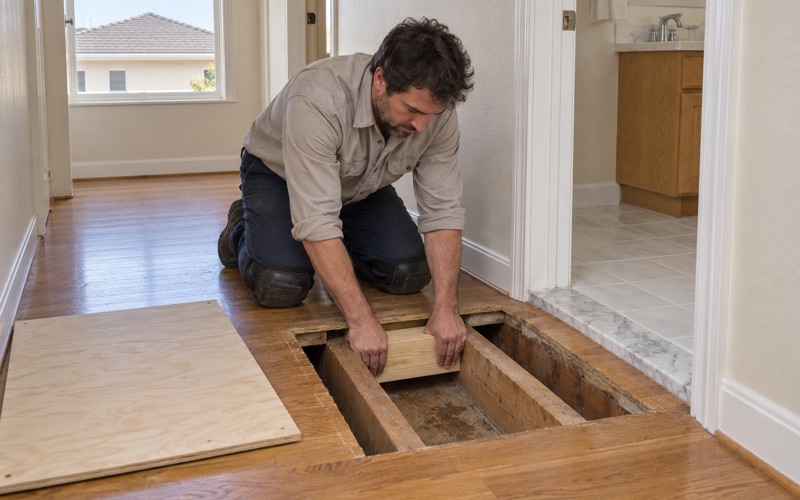
A handful of cupped boards by a dishwasher, pet urine stains in a bedroom or a split plank at a doorway rarely calls for an empty unit. We cut out damaged boards and weave in replacements so the new pieces run with the surrounding grain, then blend the finish across the repair. With a tenant home, we schedule the noisy cutting in a single block of time.
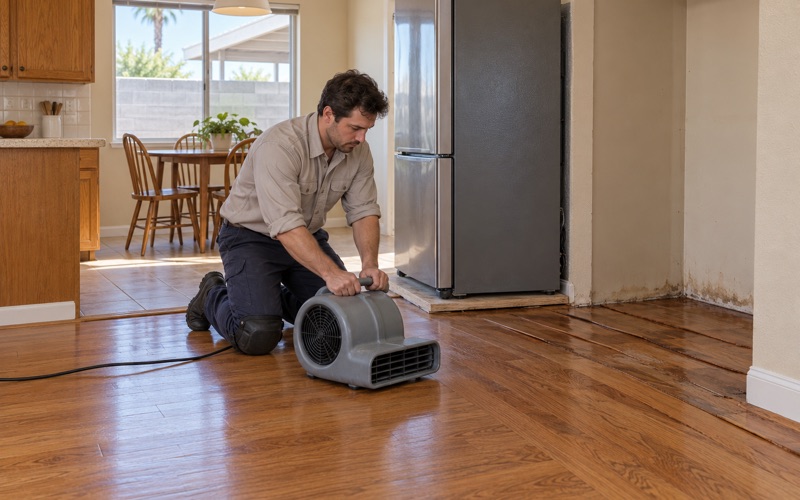
Soft spots near toilets, tubs and sliding doors get traced to the subfloor before we price a finish floor, because a spongy area is often an old leak rather than a flooring problem. If a dishwasher supply line, refrigerator water line, water heater or AC condensate line was the source, we rebuild after drying and document moisture readings and photos an insurance adjuster can use.
Stairs, transitions and trim
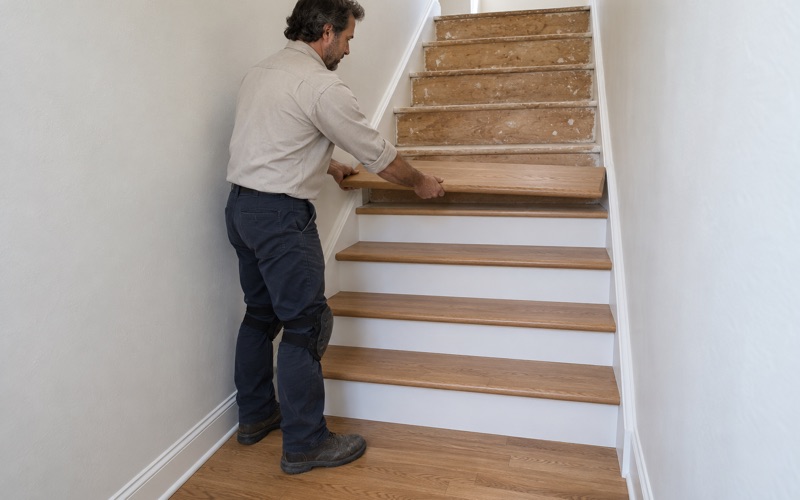
Carpeted stairs converted to hardwood are a common rental upgrade because stair carpet wears first and shows it. We price that work per stair tread and riser rather than hiding it in a square-foot number, and we plan it so one side of the staircase stays usable when that is possible. Reducer strips, T-molding and shoe molding go in last, once the finish has cured.
When Floors Ride Inside a Larger Permitted Remodel
Following the trades that lead the job
Some rental projects are bigger than a floor. When an owner is repiping a unit, rerouting a line after a slab leak or reworking an electrical system, the floor is usually the last finish to go down, and we plan around the contractor running the permitted work. We coordinate where the plumber’s access opening will be before any boards are cut, so the patch is part of the layout.
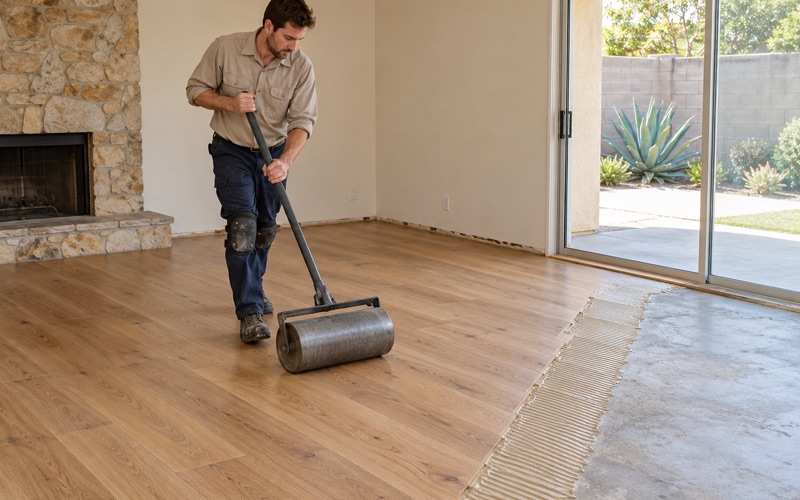
In those projects our role is narrow. We read moisture in any concrete slab we are asked to cover, using calcium chloride or ASTM F2170 in-situ relative humidity testing, and we write the readings down before engineered wood goes over it. On wood subfloors, a wood moisture meter confirms the moisture content of both the subfloor and the flooring after acclimation.
Older units and hazardous-materials questions
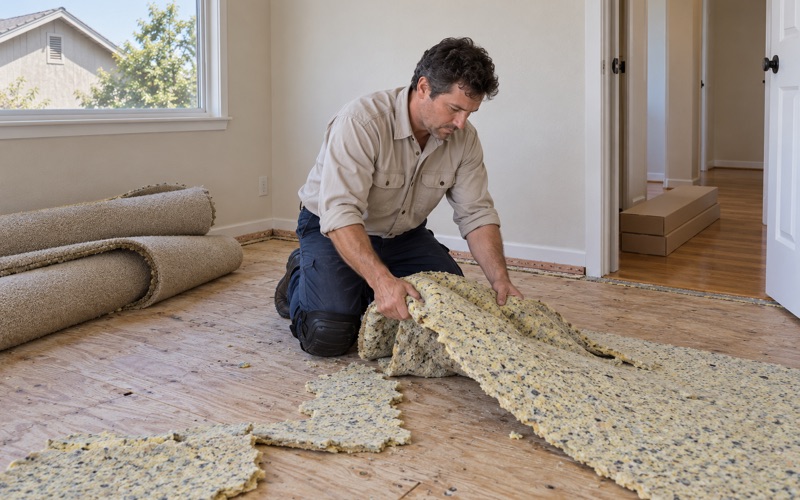
In Buena Park, 76.2 percent of housing units were built before 1980, and 36.6 percent date from the 1950s alone. In a unit of that age, 9x9 floor tile and black mastic under carpet are treated as an asbestos question before anything is sanded, scraped or covered. An asbestos survey answers it, and any removal follows SCAQMD Rule 1403 with the appropriate abatement contractor.
In pre-1978 housing we follow lead-safe work practices under the EPA Renovation, Repair and Painting rule. Those precautions govern how we work. They do not decide how the overall project is classified under Chapter 8.60, which remains a matter between the owner, the city and anyone advising the tenant.
Planning Rental Floor Work in Buena Park
What the housing numbers suggest
Of Buena Park’s 24,322 occupied units, 10,944 are renter-occupied, so many owners here manage floors they do not live on. Half of the city’s renter households, 5,475 of them, live in buildings of five or more units. In those buildings, finish choices and work hours often follow the building’s own rules, and we ask for them before we schedule.
That mix means our Buena Park calendar holds very different jobs side by side: a single refinish in a detached house between tenants, a stair conversion in an occupied townhome, or a run of apartment turnovers where we sand one unit while a neighbor’s goes on normally. The planning is similar in each case, starting from who is living there and how long they can go without each room.
Scheduling with tenants and owners together
For occupied units, we write a room-by-room plan the owner can share with the tenant: which rooms we need each day, how long the finish takes to cure, and when furniture can return. A written plan heads off the arguments that start when a job runs a day longer than someone expected.
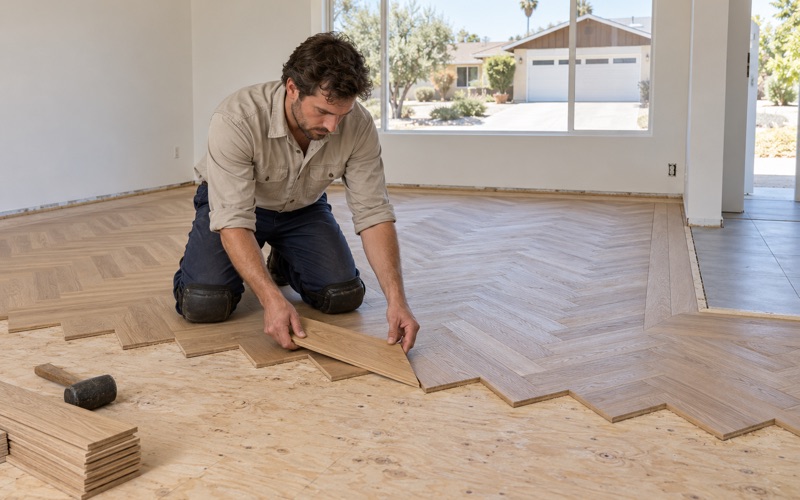
Between tenancies, the calculation changes. An empty unit lets us sand the whole floor in one pass, choose a finish for durability over fast return times, and handle board replacement, stairs and trim together. Owners also ask about wear-and-tear disputes at move-out, and our role there is limited to documenting the floor’s condition with dated photos.
Where the legal questions go
We plan floors, and we are careful not to act as legal advisors. If an owner or tenant has a question about Chapter 8.60, a notice or relocation, the city’s Community and Economic Development department takes calls at (714) 562-3586, and the Fair Housing Foundation offers eviction help at (800) 446-3247.
Once those questions are settled, we are glad to walk the unit, check what is under the carpet, take moisture readings and put a written scope and schedule in front of everyone involved. Whether the floor goes down around a tenant or waits for a larger permitted job, the plan starts with the same visit.
- 20+ Years in Wood Flooring
- Moisture Readings in Writing
- Room-by-Room Cure Schedule