Cypress Wood Flooring has spent more than 20 years on wood-flooring in East Whittier houses, and one request comes up more than most: making the floors in a long-held home safer to walk on without turning the whole house upside down. That request shapes how we inspect a floor, what we recommend and how we schedule the work around the people living there.
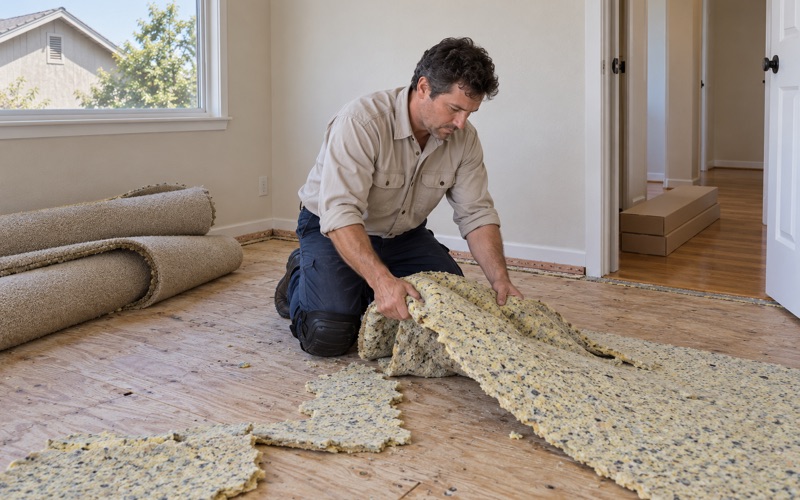
The calls usually start with something small. A threshold catches a slipper, a hallway finish has worn glossy and slick, or a spot near the tub gives a little underfoot. We check what is actually under the carpet or vinyl before anything is quoted, because the right fix depends entirely on what we find once the covering comes up.
This page covers a county grant older owners sometimes ask us about, what that program names for floors and what it leaves out, and how we approach slip resistance with wood. We keep the two things clearly apart. We are a flooring company, not the agency, and the county alone decides who receives its money and for which repairs.
A County Senior Grant and Who It Is Written For
Unincorporated County, Fourth District
East Whittier has no city hall. It is an unincorporated community in Los Angeles County, governed by the Board of Supervisors and represented in the Fourth Supervisorial District by Supervisor Janice Hahn. Until 2012 the community was known as East La Mirada. That status matters here, because the county organizes its home-repair programs around unincorporated districts rather than city limits.
The Los Angeles County Development Authority, known as LACDA, runs a Senior Grant Program for owner-occupants in the unincorporated areas of Supervisorial Districts 1, 2, 4 and 5. Its stated purpose is mobility and habitability repairs that help low-income seniors, 62 or older, remain in their homes and age in place. The maximum grant amount the program lists is $20,000.
Ownership, Income and the Property
The program sets several conditions. The applicant must be an owner-occupant with the home as a primary residence, must have owned it for at least 12 months before applying, and must be at or below 80 percent of Area Median Income. The published income limits run from $93,300 to $175,900, depending on household size.
Eligible property types are a single-family house, a condominium or a townhome. East Whittier’s placement in District 4 comes from Fourth District releases and public references rather than a county address roster we have read. So we treat eligibility for any particular address as a question for LACDA to answer, never one we settle over the phone.
Why the Question Comes Up So Often Here
The census numbers explain it. Of the 2,105 owner households in East Whittier, 637 are headed by someone 65 or older, about 30.3 percent, and another 141 owner householders are between 60 and 64. Many have owned a long time: 426 owner households moved in during 1989 or earlier, according to the 2024 American Community Survey.
Nearly all of those owners live in detached houses, 2,102 of the 2,105 owner households. A detached house means one owner makes every floor decision with no association board involved. In a house owned for decades, it also often means more than one generation of flooring meeting at doorways, each at its own height.
Looking for wood-flooring closer to Fullerton? See Wood-Flooring in Fullerton.
What the Grant Names for Floors, and What It Leaves Out
The One Flooring Item on the List
LACDA’s list of eligible repairs is short and specific: wheelchair ramps, grab bars, widened doorways, non-slip floor covering, and conversions from tubs to roll-in showers. The program also mentions deferred maintenance on roofing, plumbing, electrical or heating. Of everything named, non-slip floor covering is the only item that touches the floor.
That wording is narrower than it can sound to someone hoping to redo a living room. The list says nothing about hardwood, refinishing or replacing a floor, and we do not read more into it than it says. What the county approves for a given house is decided by the county, under its own review.
Reading the Words Carefully
Non-slip floor covering describes a surface meant to resist slipping. In practice that phrase may point toward a textured resilient floor covering in a bathroom or kitchen, where water is the hazard, rather than toward the wood in a bedroom. We tell owners that plainly, even when it means the grant is not a route to the floor they pictured.
What we can do is describe an existing floor accurately. If an owner is preparing questions for the program, we can note where the slick areas are, where a transition stands proud and where the subfloor flexes, with photos to match. That record belongs to the owner, who decides whether and how to use it.
A Separate Program With No Floor Item
LACDA also runs a Handyworker Program for minor home repairs in unincorporated areas of Districts 1, 4 and 5, with grants up to $9,000. Its published list names no flooring item, so we do not steer floor questions toward it. The Senior Grant Program is the one whose wording mentions a floor surface at all.
Making Wood Floors Safer Underfoot
Finish, Sheen and Traction
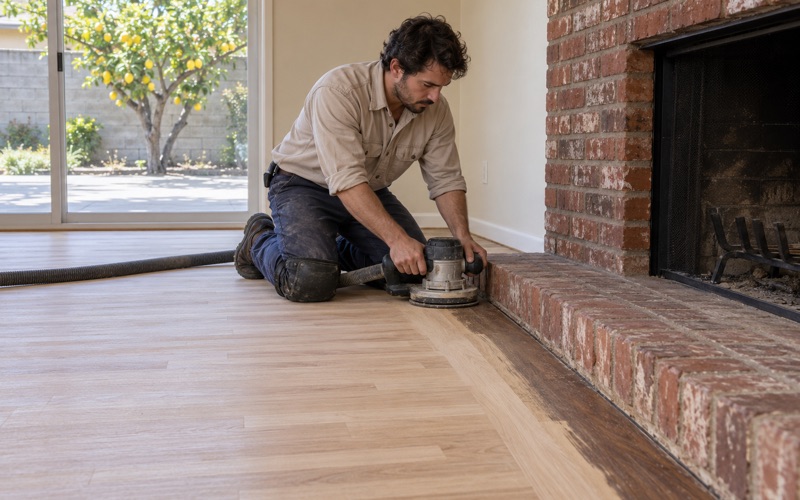
A wood floor feels slick for a few reasons, and gloss is the most common. A high-sheen finish throws glare and reads as slippery to older eyes before it actually is. When we refinish, a satin or matte sheen level in waterborne polyurethane cuts that glare and gives a hallway lit from one end better visual contrast.
Every finish we apply is legal to use in the South Coast air basin under SCAQMD Rule 1113, which caps wood coatings at 275 g/L VOC. For a floor that is sound but worn, a screen and recoat can restore a fresh surface without a full sand, and it gives the household its rooms back sooner.
Transitions, Thresholds and Soft Spots
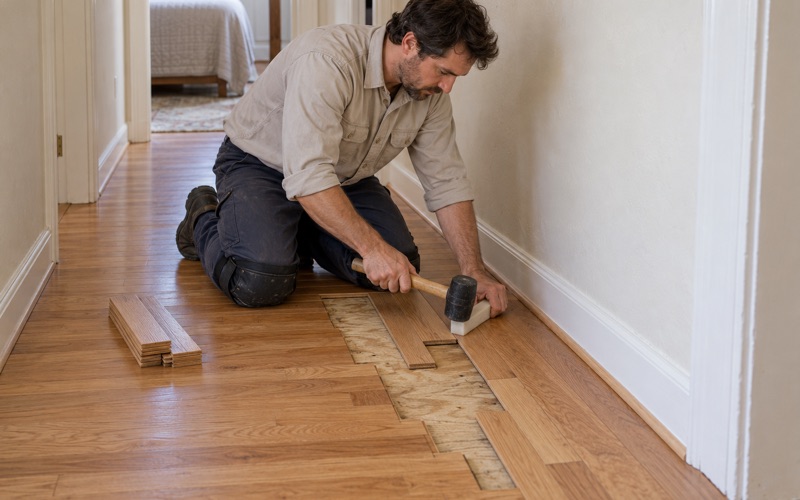
Trips happen at edges more often than in the middle of a room. A raised reducer strip between carpet and wood, a T-molding that has lifted, or boards that have crowned at a doorway all make a catch point for a walker or a shuffling step. We look at each transition and flatten or replace the ones that stand proud.
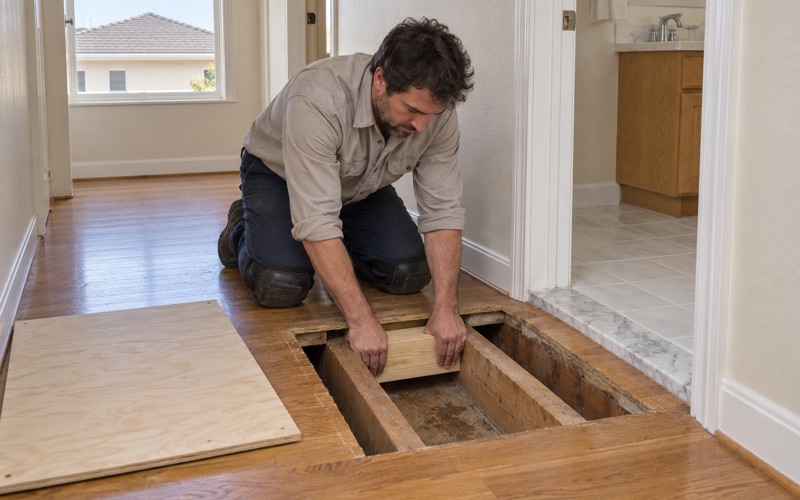
Soft spots near toilets, tubs and sliding doors are traced to the subfloor before we price anything above them. A plywood subfloor that has taken water for years can flex enough to make a floor feel uncertain underfoot. Repairing the subfloor first is what keeps a new or refinished surface from failing in the same place.
Rugs, Stairs and Where Wood Fits
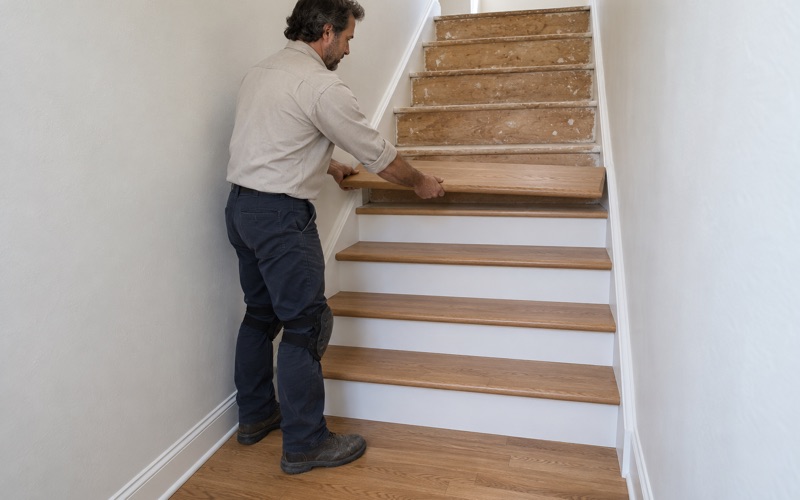
Loose area rugs on a smooth wood floor are a hazard we point out on nearly every visit, and a proper rug pad or removing the rug often does more than any product. Carpeted stairs converted to hardwood are priced per tread and riser, with a clearly defined stair nosing so each step reads plainly to someone holding the rail.
In wet rooms we are candid that wood is not always the answer. A bathroom used for a daily shower, and perhaps headed toward a roll-in shower later, is a better place for a slip-resistant surface than for hardwood. We would rather say so than sell a floor that makes the room harder to live in.
Older Houses, Planned Around the People in Them
What the Housing Stock Tells Us
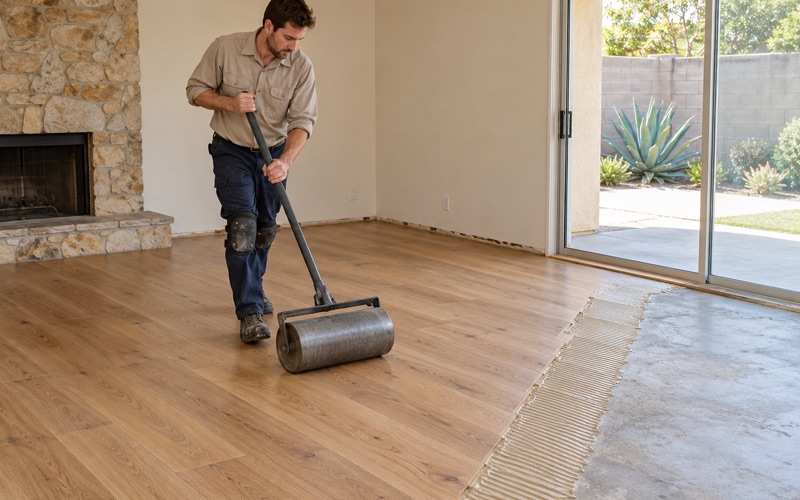
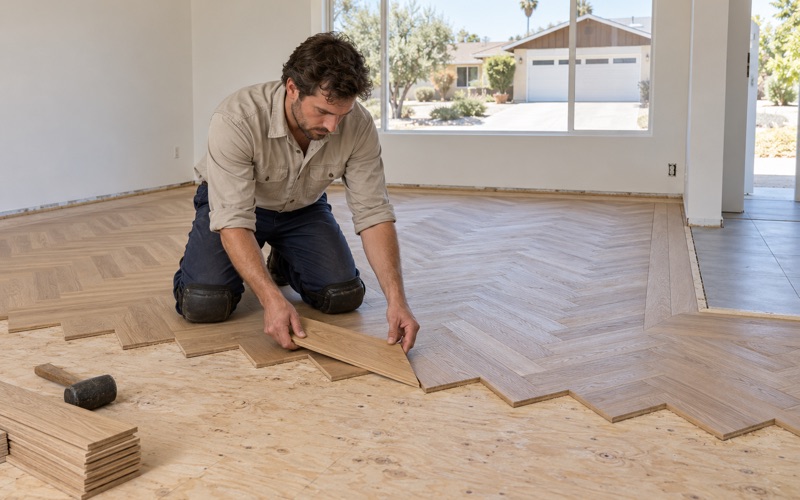
East Whittier’s housing comes largely from one decade. Of the 3,412 units the 2024 survey counts, 55.0 percent were built between 1960 and 1969, and 95.3 percent before 1980. Under the carpet in a house that age we might find oak strip flooring, a plywood subfloor or a concrete slab, and we confirm which before quoting.
A pre-1980 house also raises an asbestos question. Old 9x9 floor tile and black mastic are treated as possible asbestos-containing material before anything is sanded, scraped or covered, which can mean an asbestos survey comes first. Houses built before 1978 get lead-safe work practices under the EPA Renovation, Repair and Painting rule.
A Room-by-Room Plan for an Owner Staying Home
Many older owners do not want to move out for a floor job, and they should not have to guess when a room is usable again. We write a room-by-room plan and a cure schedule, so the household knows when each space can be walked on in socks, when furniture can return and where to sleep meanwhile.
We sequence the work so a clear path to the bathroom and the bedroom stays open at every stage. Where the floor allows it, we sand with a dustless sanding system, which keeps most of the fine dust out of the rooms still in use. Owners with breathing concerns tend to notice that difference more than any other.
Moisture, Leaks and a Written Record
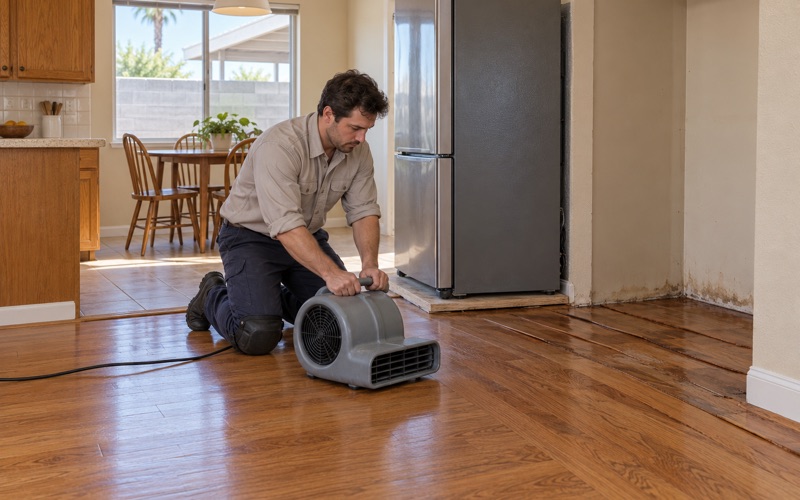
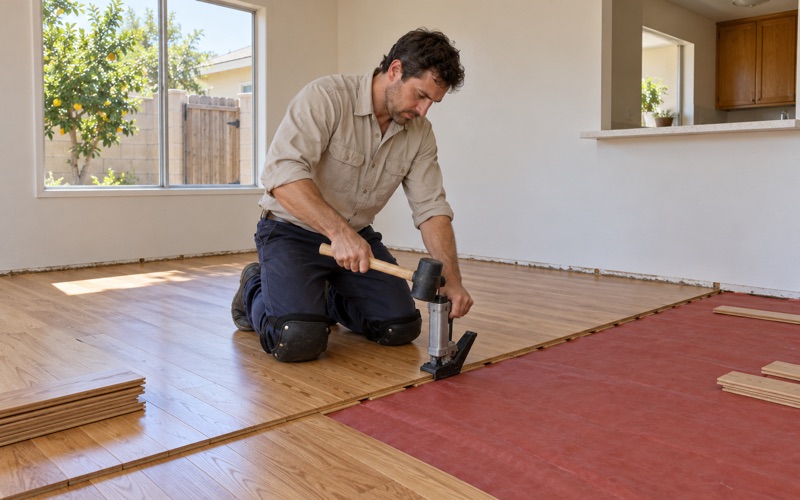
Water from a water heater, a dishwasher supply line or an AC condensate line is something we check for in any older kitchen or hallway, using a wood moisture meter before recommending a repair. Concrete is tested for moisture before engineered wood goes down, and every reading is written down rather than estimated.
Where a slab leak is part of the story, we rebuild the floor only after the plumber has repaired or rerouted the line, with the access opening planned before any boards are cut. The photos and readings we keep are useful to an insurance adjuster, and just as useful to an owner weighing options, with or without a grant.
- 20+ Years in Wood Flooring
- Moisture Readings in Writing
- Room-by-Room Cure Schedule