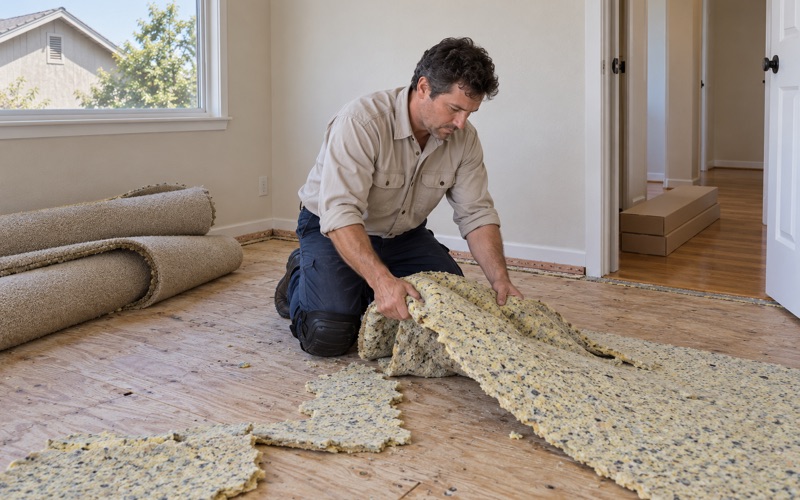
Cypress Wood Flooring brings more than 20 years of hands-on work to wood-flooring in Fullerton, and the jobs that ask the most of us are the ones where the floor is not the only old wood in the room. Sanding, repairing or refinishing a floor that runs up against original paneling, built-in cabinets and door casings is a different job from sanding an open room, and we plan it that way from the first visit.
We start by finding out what is actually underfoot, whether that turns out to be oak strip, a later plywood layer or tile over something older, before we quote anything. On houses built before 1978 we follow lead-safe work practices under the EPA Renovation, Repair and Painting rule, because an edger runs right along painted baseboard and casing.
Finishes come only from products legal to apply in the South Coast air basin, where SCAQMD Rule 1113 holds wood coatings to 275 g/L. Every job also gets a written cure schedule and a room-by-room plan, so a household living in the house through the work knows which rooms can be walked on and furnished, and when.
The Hetebrink House and What Its National Register Form Records
A 1914 Mission Revival House on East Chapman Avenue
Fullerton, a city in northern Orange County with 143,617 residents at the 2020 census, has a handful of houses whose interiors were written into the historical record in detail. The clearest example is the Hetebrink House at 515 East Chapman Avenue, built in 1914 in the Mission Revival style, designed by the architects Elwing and Tedford and built by Bishop and Cole.
It was entered in the National Register of Historic Places on July 1, 1993, under reference 93000597. The nomination, prepared by Diann Marsh of Fullerton Heritage, describes a house of about 4,500 square feet with seven bedrooms, two baths, a living room, dining room, library and large kitchen, built of concrete brick under a terra cotta roof.
Why a Registration Form Matters to a Floor Crew
A registration form is written to argue why a building is significant, and for the Hetebrink House that argument reaches indoors. In 1993 the form stated that “the interior is almost entirely original,” then cataloged the rooms: china cabinets with beveled glass, pocket doors, a built-in desk and benches, a built-in buffet, and a two-tiered stairway with matching solid wood panels.
That list reads like a floor contractor’s hazard map. Each of those pieces meets the floor or sits within inches of it, and each is the kind of work a sanding machine or a careless pry bar can damage in seconds. The form describes the house as it stood in 1993, and we cite it for what it teaches about houses like it, not as a report on the house now.
What the Form Leaves Out
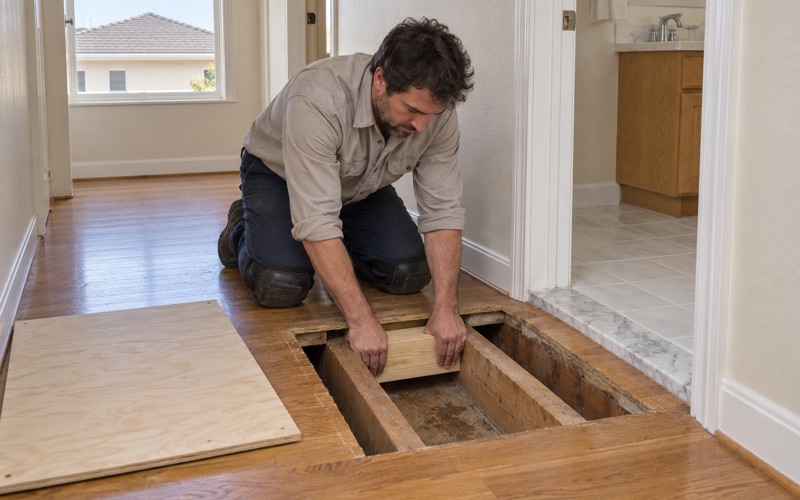
The form names wood species for the woodwork, yet it names no floor material anywhere. That gap is instructive. On an older Fullerton house we never assume what the floor is from the age of the trim or from what a neighbor found; we lift a register cover, check a closet edge or pull back a corner of carpet and confirm it.
The form also makes clear that Mission Revival is rare in this city. It names just one other example, the Hale House at 2025 East Chapman Avenue, and notes that it has been somewhat altered since becoming a Montessori school. The lesson we draw is about original interiors, not about the style.
Looking for wood-flooring closer to Long Beach? See Wood-Flooring Services in Long Beach.
Red Gum Paneling, Oak Woodwork and the Floors Beside Them
Two Woods in Two Kinds of Rooms
The 1993 form records that Australian Red Gum was used for all of the woodwork and paneling in the Hetebrink House except the dining room, where the wood is oak. Upstairs, the bedrooms and baths open off a semicircular hall bordered with solid Red Gum panels. None of that describes a floor, and we are careful never to read it as one.
What it does describe is a house where the floor meets two different woods with two different tones, and where a finish that looks right against oak in one room can look wrong against Red Gum in the next. In a house built this way, we judge stain and sheen against the woodwork in each room rather than against a sample board carried in from the truck.
Matching Tone Without Touching the Trim
Original woodwork in an early 20th-century house has usually aged for decades under its own finish. Our goal on the floor is to sit comfortably beside it, not to copy it, and never to refinish it along the way. We test stain on a hidden patch of the floor itself, close to the trim, so the comparison happens in the room’s own light.
Sheen matters as much as color. A high-gloss floor under satin paneling can make old woodwork look tired by comparison. Where original trim is present we usually steer toward a lower sheen level, and we show owners samples of waterborne polyurethane, oil-modified polyurethane and hardwax oil finish side by side before anything is chosen.
Built-Ins That Rest on the Floor
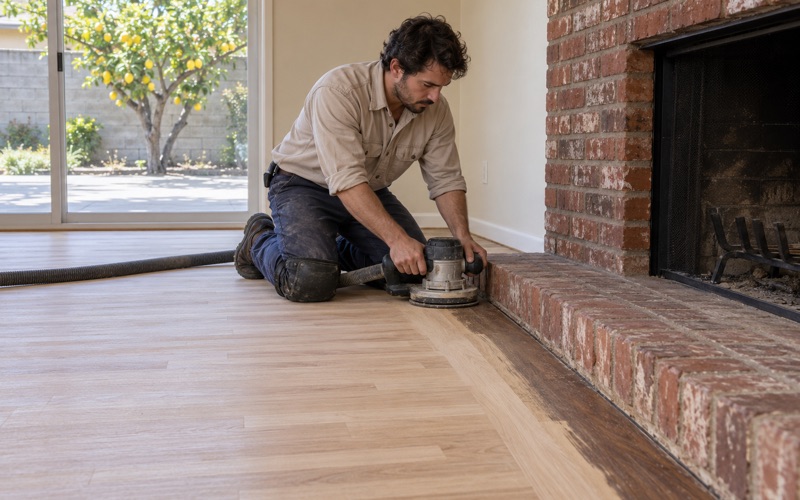
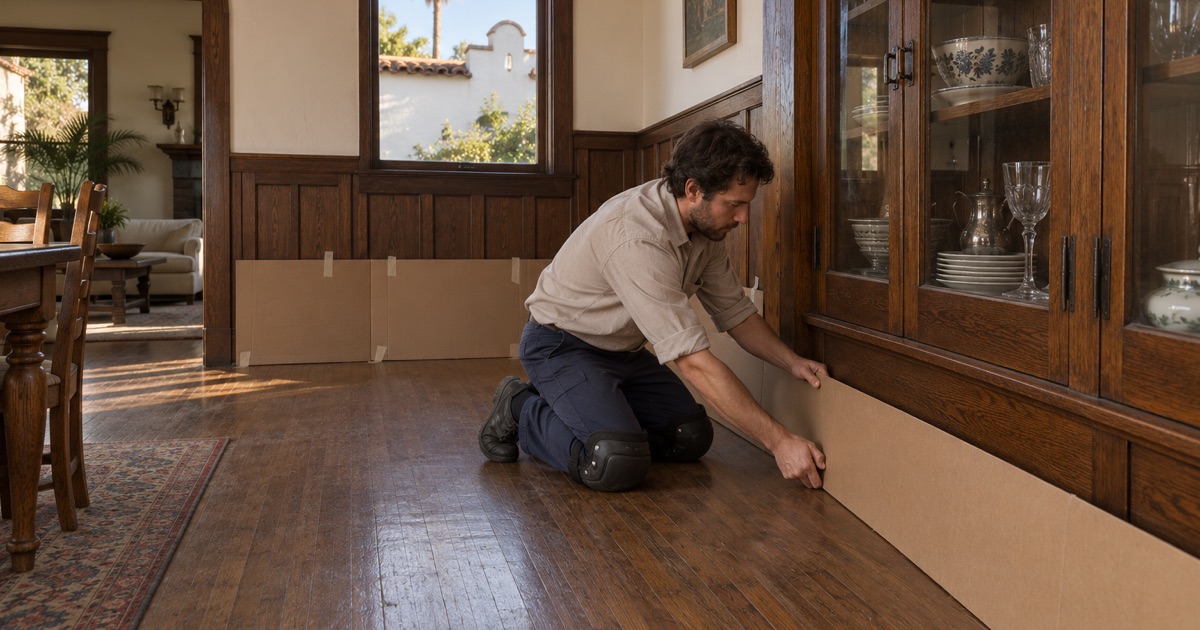
Built-in buffets, china cabinets, benches and desks usually rest on the flooring or on a base the flooring runs up to. They cannot be slid aside like furniture, so the floor has to be worked around them. We hand-scrape and hand-sand along cabinet bases and bench fronts instead of pushing an edger into them.
That hand work is slower, and we price it honestly rather than hiding it inside a square-foot number. It is also where most of the risk on a job like this sits, so it is done by the most experienced person on the crew, not handed to whoever finishes the open floor first.
Protecting Original Trim During Floor Work
Before the Sander Arrives
Protection starts with a walk-through. We photograph every piece of original woodwork that touches the floor: baseboards, door casings, stair skirts, cabinet bases and the bottom rails of pocket doors. Those photos become the record we work against, and the owner gets a copy before the first machine is plugged in.
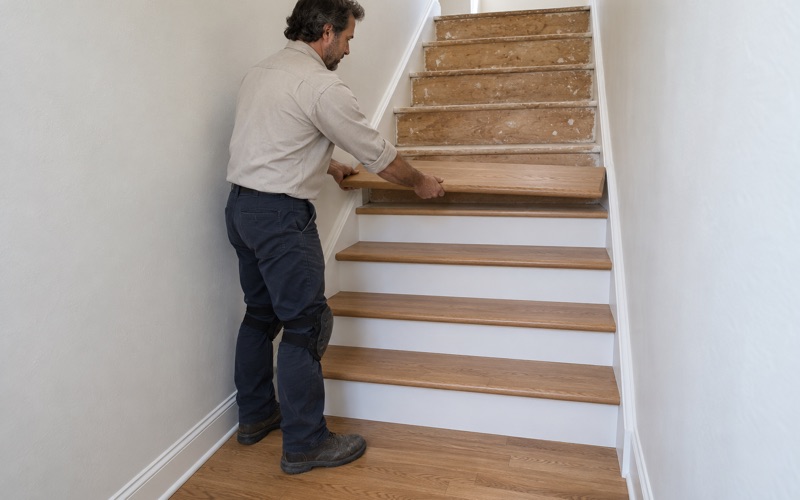
Then the woodwork is covered. Base and casing get low-tack tape and a rigid guard wherever the edger will run, built-ins get fitted covers, and stair paneling is wrapped. Pocket doors are closed into their pockets or shielded where they cannot be. Rooms we are not working in are sealed off so dust does not settle into paneled surfaces.
Shoe Molding, Base and the Edge of the Floor
In many newer houses the shoe molding is pulled, the floor is sanded to the wall, and new molding goes back on. In an older house with original trim, that shoe may be as old as the house, with nail holes that will not take a second set cleanly. We decide piece by piece whether to leave it and sand to it, or to number it, remove it gently and reinstall it in the same spot.
Leaving it means more hand work at the edge and a slightly narrower band of machine sanding. Removing it means a slower first and last day. Either way, no original molding goes into a dumpster, and no replacement piece goes on without the owner agreeing to it first.
Dust and Cure Time Around Old Woodwork
Fine sanding dust settles into paneling joints and pocket-door tracks, and it is hard to get back out. We run a dustless sanding system on the drum sander and orbital sander wherever the layout allows, and vacuum each room before finish goes down. On a pre-1978 house, that same containment is part of the lead-safe practice described above.
Finish choice affects the woodwork, too. Solvent odor lingers in a closed paneled room, and many owners want the house usable sooner. Waterborne coatings cure with less odor and usually let us hand rooms back on a shorter schedule, which we write down room by room so nobody sets a rug down a day early.
Floors in Fullerton’s Early 20th-Century Houses
How Uncommon These Houses Are Here
Early houses are a small share of Fullerton’s housing. Of 50,344 housing units in the Census Bureau’s American Community Survey, 2,379, or 4.7 percent, were built in 1939 or earlier. The building peak came later, with 21.9 percent of units built in the 1950s, and 71.3 percent of all units predate 1980.
That makes a pre-1940 house here a genuine exception, and its owners tend to know it. The city counts over twenty properties on the National Register of Historic Places and nearly 100 Local Landmarks, so original interiors are something a good number of Fullerton owners have chosen to look after.
Repair Before Replacement
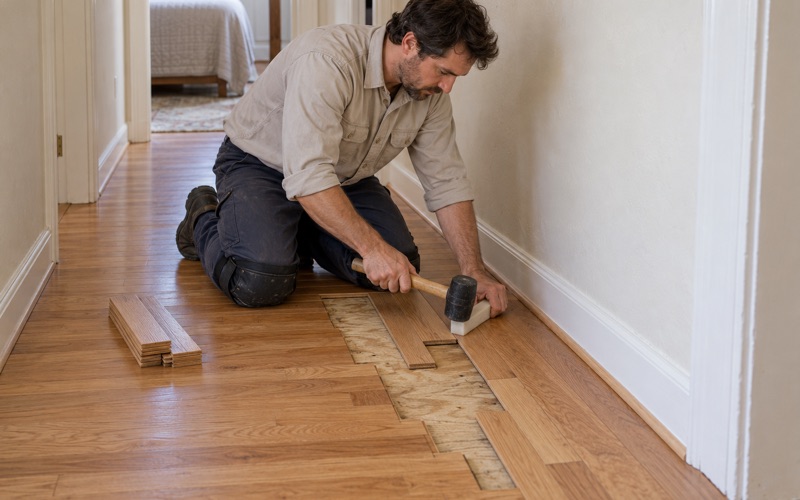
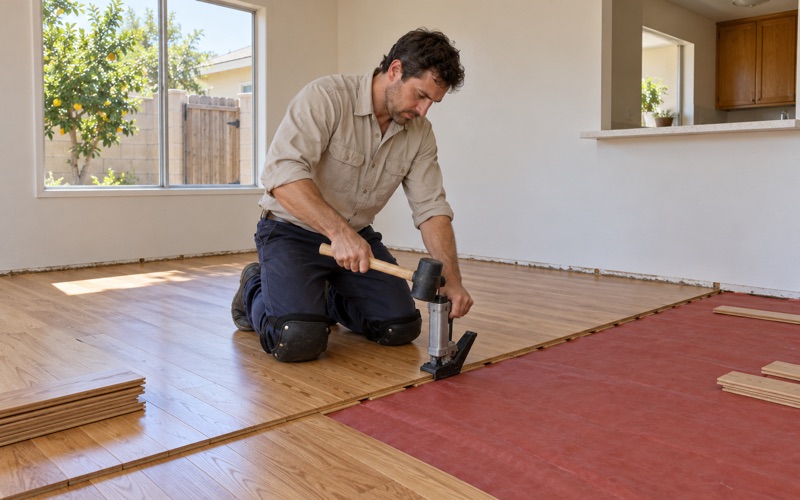
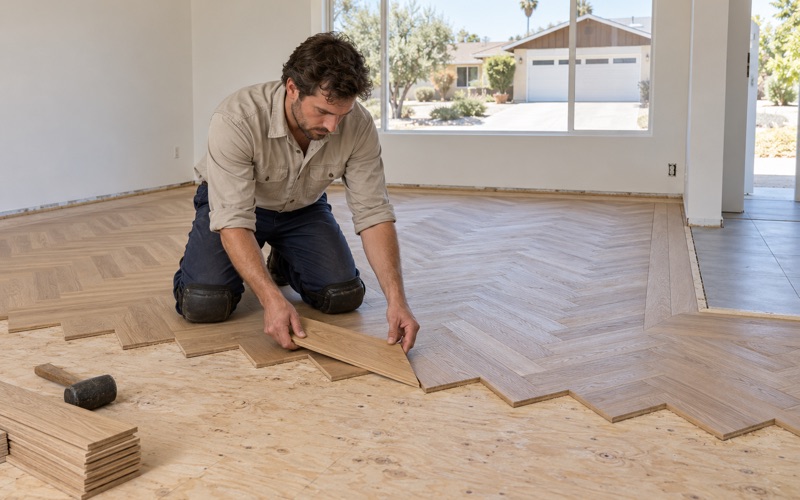
When a floor in an older house is worn, our first question is how much of it can stay. Board replacement and weave-in repair let us swap damaged strips for matching stock, cut in so the joints stagger like the rest of the floor. A screen and recoat refreshes a sound finish without sanding into the wood at all, which is the gentlest option next to original trim.
Full sanding is sometimes the right call, but every sanding removes wood, and a solid floor has a finite number of them left. We check how much wear surface remains before recommending one, then set the grit sequence to take off only what the damage actually requires.
Checking What Is Underneath
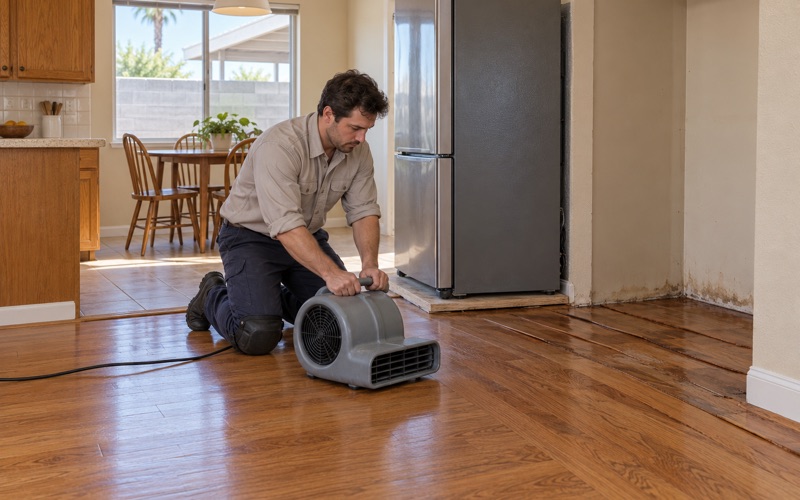
Older houses have seen decades of plumbing and remodeling changes, and an early floor may carry patches or later boards laid in a different direction. We check moisture content with a wood moisture meter before repair stock goes in, and let new boards acclimate in the house so they settle to the same condition as the floor around them.
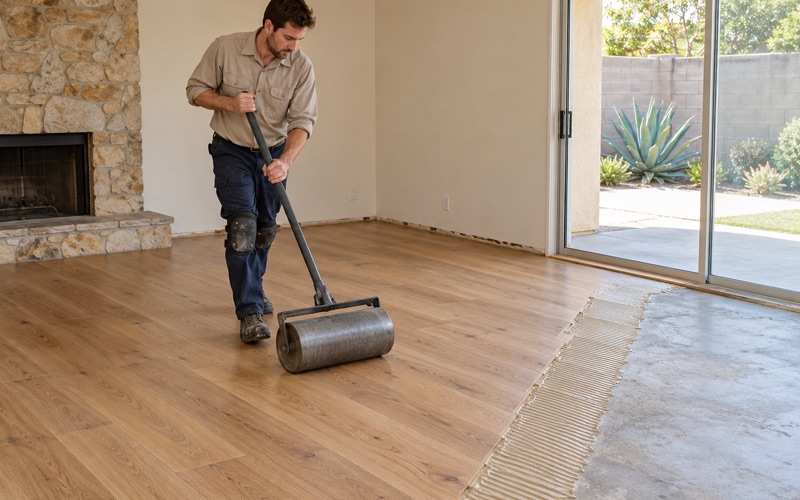
Where a room has already lost its first floor to carpet or tile, we look beneath before quoting. In a pre-1980 house, old floor tile and black mastic are handled as an asbestos question before anything is scraped, sanded or covered. Only once we know what is there do we price the job, and the quote names what will be protected as plainly as what will be sanded.
- 20+ Years in Wood Flooring
- Moisture Readings in Writing
- Room-by-Room Cure Schedule