
Cypress Wood Flooring has built hardwood stair treads for more than 20 years in Cypress, CA, serving surrounding cities including Los Alamitos, Hawaiian Gardens, La Palma, Stanton and Buena Park. We turn carpeted staircases into hardwood, fitting new treads, risers and stair nosing matched to the floors they connect.
Stairs are the part of a flooring project most often underestimated. Every step is measured, cut and fitted individually, and older staircases are rarely perfectly square. That is why we price stairs per tread and riser, not folded into a square-foot number, so you can see exactly what the staircase costs on its own and compare quotes fairly.
Many two-story houses and townhomes in the area still have their original carpeted stairs. Replacing that carpet with wood is one of the most visible upgrades in a home, and done well, it looks as though the hardwood staircase was always there.
What a Stair Conversion Involves
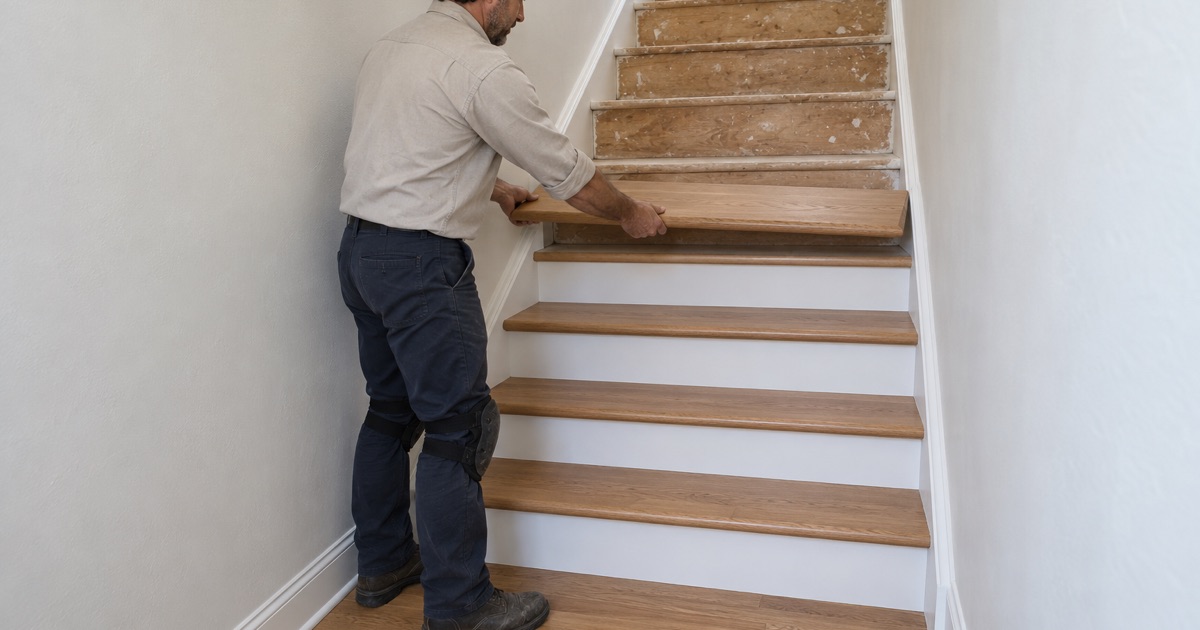
Removing Carpet and Finding the Structure
The carpet, pad, carpet tack strip and staples come off first. Underneath, most stairs have rough construction-grade treads and risers, sometimes with a nosing overhang that must be cut back. We inspect each step for squeaks, loose treads and damage before planning the new work.
Squeaks are easiest to fix at this stage, when the structure is open. We glue and screw loose treads to the stringers and shim any gaps, so the finished staircase is quiet as well as good looking.
Stair Treads
The stair tread is the horizontal surface you step on. New hardwood treads are either installed over the existing trimmed treads, with the old nosing cut flush, or they replace the rough treads entirely. The approach depends on the stair’s construction and on keeping every step the same height.
Consistent riser height matters for safety. Adding a tread cap changes the height of the top and bottom steps unless it is planned for, so we measure the whole run and adjust where needed to keep each step uniform.
Risers and Stair Nosing
The stair riser is the vertical face of each step. It can be hardwood, matching or contrasting with the treads, or painted, often in white for a crisp look that hides shoe scuffs. Stair nosing is the rounded front edge of each tread, and on the landing it forms the transition between the stairs and the floor above.
The nosing is where most wear happens and where a slip is most likely, so we make sure it is solid, well fastened and clearly visible. A matching landing nosing lets the hallway floor meet the stairs without a raised or awkward edge.
Materials and Matching
Species and Construction
Stair treads are commonly made in red oak and white oak, and are also available in hickory, maple and other species. Solid treads are the most common choice, while some engineered floors offer matching stair parts. Choosing a species that matches the floor keeps the look consistent from one level to the next.
Harder species hold up better on stairs, which take concentrated wear on the nosing and center of each tread. On the Janka hardness rating, hickory and maple rank above the oaks, though oak remains the most popular choice for its grain and ease of matching.
Matching an Existing Floor
When the stairs connect to an existing hardwood floor, we match species, color and finish so the stairs look original. With a site-finished floor, the treads can be stained and finished alongside it. With a prefinished floor, we look for matching prefinished stair parts or finish the treads to match on site.
Where the floor is older and has mellowed in color, new treads can look too bright next to it at first. We use stain samples on offcuts of the new tread stock to bring the color close, and we tell you how both will age, since oak under an oil-modified finish continues to warm over time.
Open Stairs, Skirts and Balusters
Some staircases have an open side with balusters set into the treads, and others are closed on both sides by a skirt board. Open stairs need returned nosing on the exposed end of each tread, and the balusters must be removed and reset or worked around carefully.
We look at the handrail, balusters and skirt boards when we quote, because they affect how much each step takes. Loose balusters and a wobbly rail are easiest to tighten while the treads are open, and we can point out any that need attention.
Finishes for Stairs
Stairs need a durable finish that is not slippery. We often recommend a matte or satin sheen, which shows less wear and offers more grip than gloss. Finishes are chosen from products legal in the South Coast air basin under the 275 g/L VOC limit of SCAQMD Rule 1113.
Planning Around Your Household
Keeping the Stairs Usable
In a two-story home, the staircase may be the only way to reach the bedrooms. We plan the work so the stairs are usable each evening wherever possible, for example finishing alternate steps or working in stages, and give you a written schedule showing when each step can be walked on.
Stairs in Townhomes and Condos
In a townhome, the stairs are usually part of the owner’s own interior, but the association’s CC&Rs may still include rules on work hours, noise or contractor access. We check those rules before scheduling, since some interior floor changes need no approval at all and others do.
Shared walls also carry noise, and cutting and nailing stair parts is louder than most flooring work. We keep the noisiest steps to reasonable hours and let you know in advance which days they will happen, so you can give your neighbors notice if you wish.
Safety for Older Residents
For owners planning to stay in their home for years, stair safety matters. We make sure every tread is solid and uniform in height, suggest finishes with better grip, and can recommend a contrasting nosing color or stair runners where visibility or slipping is a concern.
Older Stairs and Lead Paint
In pre-1978 housing, painted stair skirts, risers and handrail parts may contain lead. When those surfaces are cut or sanded, we follow the lead-safe work practices of the EPA Renovation, Repair and Painting rule, with containment and cleanup that protect everyone in the house.
- 20+ Years in Wood Flooring
- Moisture Readings in Writing
- Room-by-Room Cure Schedule