Cypress Wood Flooring has handled wood flooring in La Palma for more than 20 years, and much of what we get asked about here happens in the gap between one lease ending and the next one starting. A vacant unit comes with a move-in date attached, so the plan for its floors has to fit a calendar before it fits a budget.
That changes the order of the work. We look at what is actually down in the unit, whether that is a worn site-finished floor, an engineered floor laid over a concrete slab or carpet hiding something older, then write out which rooms can be finished first and when each one can take furniture again. The owner gets dates, not a vague estimate of how long it might take.
Tenants matter to this work as well. Someone moving into a freshly refinished unit, or living in one while a single damaged room is repaired, deserves to know what went down, what finish was used and how to care for it. We write that down so the landlord can hand it over along with the keys.
Who Rents in La Palma, and Where
Renters live mostly in complexes
La Palma is mostly an owner’s town, but not entirely. According to the Census Bureau’s 2024 American Community Survey five-year estimates, 1,660 of the city’s 5,118 occupied units, or 32.4 percent, are rented. Where those renters live is the telling part: 1,029 renter households, 62.0 percent of them, are in buildings with five or more units.
The largest single group sits in the biggest buildings. The same survey counts 553 renter households in buildings of fifty or more units, a third of all La Palma renters. For flooring, that means shared walls, units stacked above one another and a property manager making decisions for dozens of doors at once, rather than one family choosing a floor for one house.
Owners in houses, renters in complexes
The split between owners and renters is almost clean. The survey reports no La Palma owner household in a building of ten or more units, and roughly nine in ten owner households live in detached houses. Renters are spread differently, with some in houses and duplexes, but the large complexes belong almost entirely to the rental side of the city.
Most of that housing is of one era. The survey places 75.6 percent of La Palma’s units in the 1960s and 1970s, which is why we treat old floor tile and black mastic as an asbestos question and follow lead-safe practices on anything built before 1978. A unit that has been re-carpeted several times can still hold original resilient floor covering underneath.
The complexes the city names
The city’s housing element names several multifamily properties. Casa La Palma at 7799 Valley View Street carries 269 units under the low-income housing tax credit program, with affordability running to 2052, and Camden Place Senior Apartments at 4500 Denni Street has 35 units. The draft element describes Nova La Palma as rehabilitated in 1998 and still in good condition.
The same draft says Brookside, Suntree, Brentwood, Seasons and Camden Place require varying levels of rehabilitation, without saying what that work is. We do not read floors into that sentence. What we can say is that an owner or manager planning a unit refresh at any complex gets the same approach: look at the unit first, measure, then price.
Looking for wood-flooring closer to Stanton? See Wood-Flooring in Stanton.
Floors Built for Apartment Units
What goes down over concrete
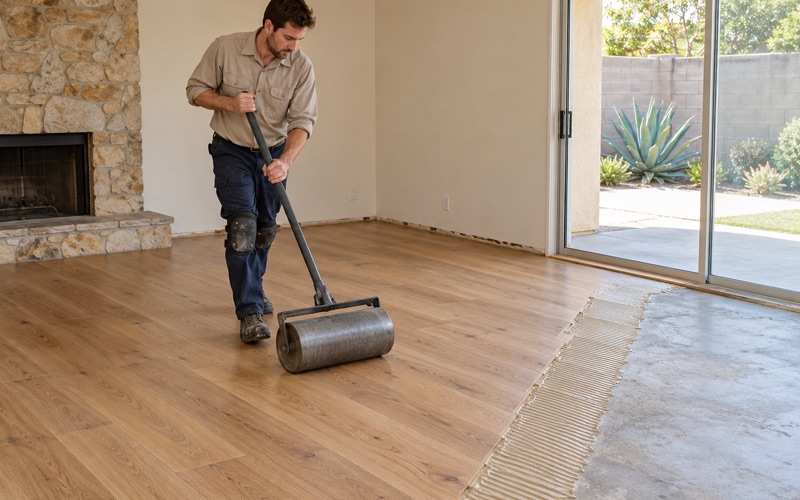
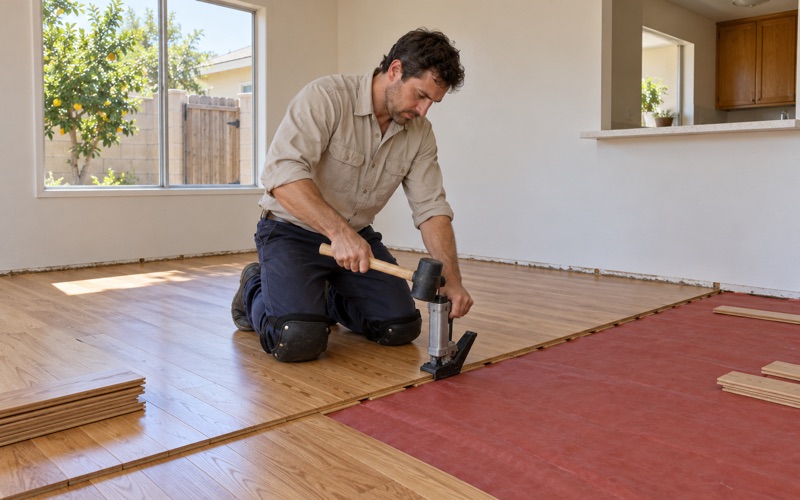
Many apartment units sit on or over concrete, and wood over concrete starts with a moisture test. We use an ASTM F2170 in-situ relative humidity test or a calcium chloride moisture test depending on the floor and the product, and we write the readings down. Engineered wood with a stable core is usually the practical choice, either glued down or floating over a vapor retarder.
Acclimation still matters in a unit that has been closed up and empty for weeks. We check the moisture content of the boards with a wood moisture meter before installation rather than trusting a set number of days. Leaving the proper expansion gap at walls and thresholds is what keeps a floating floor from buckling the first summer a new tenant runs the air conditioning less.
Upper floors and neighbors below
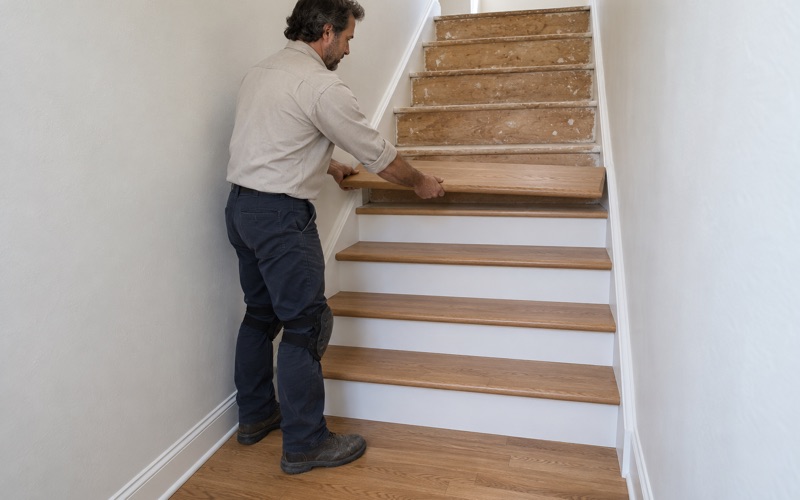
A wood floor in a second- or third-story unit carries sound to the unit below it. Acoustic underlayment under a floating or glue-down floor is part of the conversation, and so are the building’s own rules, since many complexes and associations have written requirements about hard flooring on upper levels. We ask for those rules before we quote, not after.
Wear layer thickness is the other decision that pays off over several leases. A thicker veneer can be sanded and refinished between tenants more than once, while a thin one may only take a screen and recoat. For a rental that will turn over again, we explain how many refinishing cycles a given product realistically allows before an owner commits to it.
Finishes that dry on a schedule
Finish choice in a rental is partly about wear and partly about the calendar. Waterborne polyurethane dries faster and smells less than oil-modified polyurethane, which counts when a new tenant is due in days. Every coating we use is legal in the South Coast air basin under SCAQMD Rule 1113 and its 275 g/L limit for wood coatings.
Sheen level matters more in a rental than owners expect. A satin or matte finish hides scuffs from moving furniture and pet traffic far better than a high gloss, and it shows fewer marks at the next move-out walkthrough. We write down the product, the sheen and the number of coats so the next refinish can match what is already there.
Turnover Between Tenants
How often units change hands
Renters in La Palma have mostly arrived recently. The American Community Survey reports that 69.0 percent of the city’s renter households moved in during 2010 or later, which means a large share of the rental floors in town have seen at least one move-out and move-in within the last decade or so, often more.
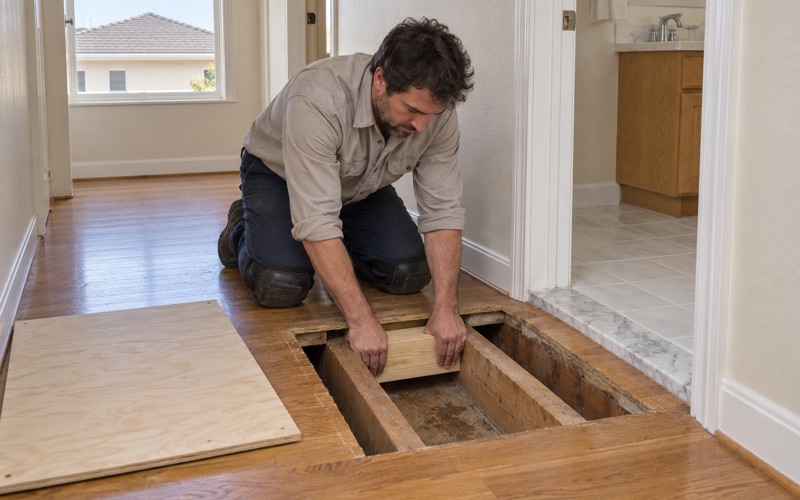
Each turnover is a chance to catch problems while the unit is empty. Furniture is gone, the whole floor is visible, and a soft spot near a tub or sliding door can be traced to the subfloor before anyone lives on it again. We would rather find a small water issue at turnover than rebuild a kitchen floor after the next lease has started.
Refinish, recoat or replace
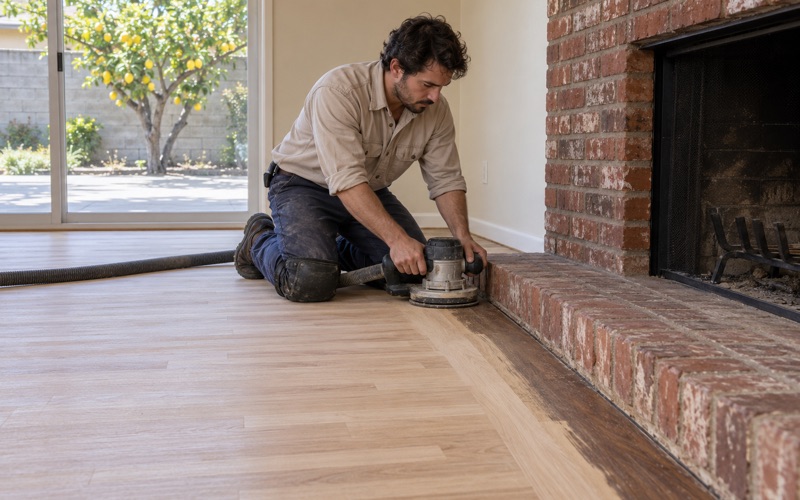
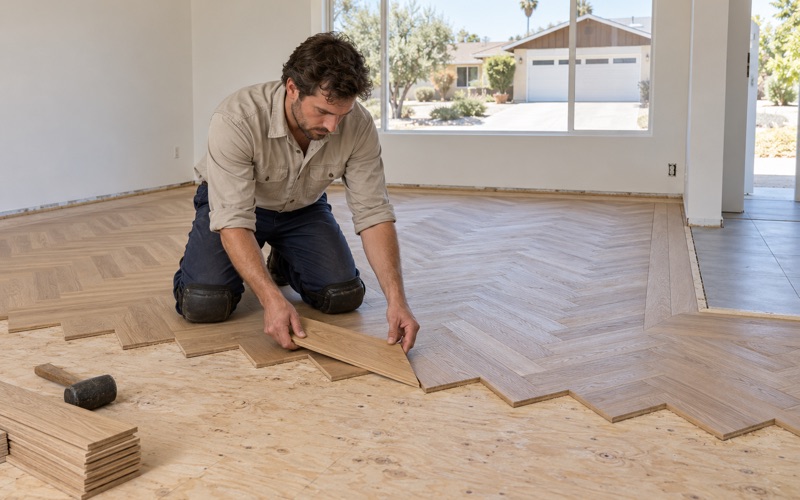
Not every vacant unit needs a full sanding. When the finish is dull and scratched but not worn through, a screen and recoat can restore it in a fraction of the time. When boards show gray oak, pet urine stains or bare wood in traffic lanes, a full sanding with a dustless sanding system and a proper grit sequence is the honest answer.
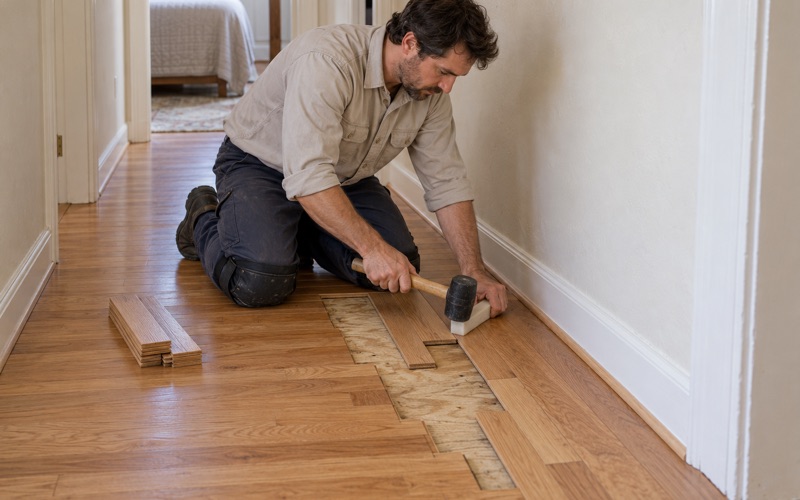
Damaged boards near entries and kitchens can often be handled with board replacement or a weave-in repair rather than a whole-room redo. For engineered floors, veneer delamination or cupping near a dishwasher supply line or refrigerator water line usually points to a leak, and we find the source before we replace anything. Otherwise the new boards fail the same way.
Wear and tear versus damage
California’s security deposit law, Civil Code 1950.5, separates normal wear and tear from damage beyond it. Light scratches and a dulled finish after years of living are generally wear. Deep gouges, large pet stains and water damage from a neglected spill can be something else, and both sides benefit from a clear record of what was there.
We photograph the floor before work starts and note what we found, room by room. That record is not a judgment about who owes what, which is between landlord and tenant, but it gives both people something concrete to look at instead of memory. It also shows the next contractor what was done and when.
Landlord-Tenant Help in La Palma
Where to take questions about a floor
Floors come up in disputes more than people expect, from a deposit deduction to a repair request that sits unanswered. The City of La Palma points residents to the Fair Housing Council of Orange County, which lists landlord tenant relations, housing information and counseling among its services. That is the place for questions about rights and responsibilities.
We stay in our lane on those questions. We can describe what a floor looks like, what probably caused a problem and what a repair involves, and we put that in writing. Whether a particular deduction or repair request is fair is a matter for the parties and, where needed, the council’s counselors, not for the company holding the sander.
State rules that apply to every lease
California’s Tenant Protection Act, Civil Code 1947.12, applies statewide and caps yearly rent increases for covered units. Separately, Civil Code 1941.1 lists the basic conditions a rental must meet to be considered habitable, including floors kept in good repair. A floor that has rotted through near a toilet is a repair to schedule promptly, not at the next turnover.
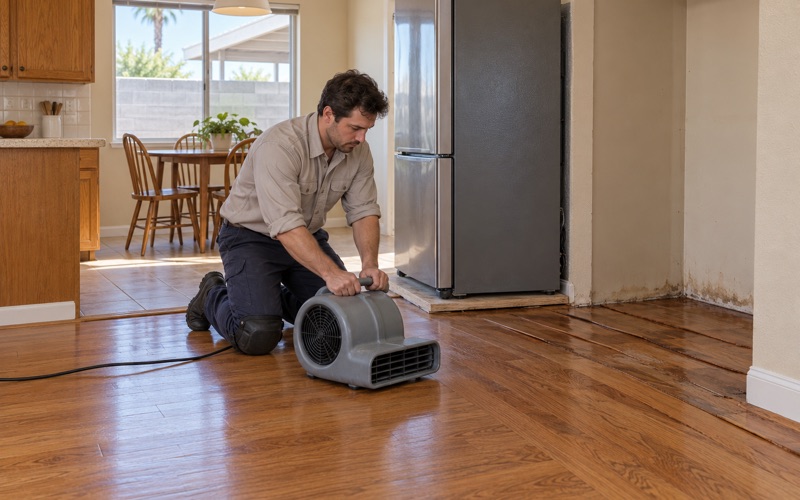
For owners, that makes subfloor problems a priority. We trace soft spots to their cause, which is often a slow leak at a wax ring or a failed tub seal, and we coordinate with the plumber before any boards are cut. After water damage we record readings and photos in a form an insurance adjuster can use, which helps when a claim is involved.
Working in occupied units
Some repairs cannot wait for a vacancy. When a tenant is still living in the unit, we plan the job room by room so the kitchen or a bedroom stays usable, and we give a written cure schedule that says when each floor can be walked on in socks, in shoes and with furniture back in place.
Dust and fumes are the usual worries in an occupied apartment with shared walls. A dustless sanding system and a low-odor waterborne finish keep both down, and we tell the tenant and the manager in advance which days will be loudest. On an older building, the asbestos and lead questions are settled before any sanding or scraping starts, whether or not someone lives there.
- 20+ Years in Wood Flooring
- Moisture Readings in Writing
- Room-by-Room Cure Schedule