Cypress Wood Flooring brings more than 20 years in the trade to wood-flooring in Laguna Woods, and a manor in United Laguna Woods Mutual is one of the few places where the first question is not which wood to choose. It is who owns the floor. In a United manor the answer is the corporation, and that changes how the whole job has to be set up.
We treat a United floor as an alteration to property the member occupies rather than owns, carried out under the mutual’s rules and at the member’s own risk. The approval comes before the schedule is fixed, the mutual’s contractor rules decide who does the work, and nothing is sanded, scraped or covered until we know what the existing layers are made of.
Below is how that plays out in practice: what a United membership actually conveys, how a co-op manor differs from the condominium manor next door, what the mutual expects before a floor changes, and what we tend to find under the carpet in manors built during the 1960s and 1970s.
What a United Member Holds, and What the Corporation Owns
A corporation that owns the dwelling units
United Laguna Woods Mutual is a stock cooperative. The Village describes it plainly: residents are members of a corporation that owns all real property, including the dwelling units, carports and laundry facilities within the mutual’s boundaries. The member does not hold a deed to the manor. The member holds a membership, and with it the right to live in one specific unit.
For flooring, that distinction is not a technicality. The subfloor, whatever sits beneath it and the finished surface all belong to property the corporation owns. When we replace carpet with engineered wood in a United manor, we are altering the corporation’s building on a member’s behalf, and we plan the work so it holds up to that description.
The occupancy agreement and shared costs
Each United member occupies a specific dwelling unit under the terms of an occupancy agreement, and members agree to pay a share of the property taxes, maintenance and other operating expenses. The mutual is run by a board elected by its members, which meets monthly. Floor decisions happen inside that governance structure, not beside it.
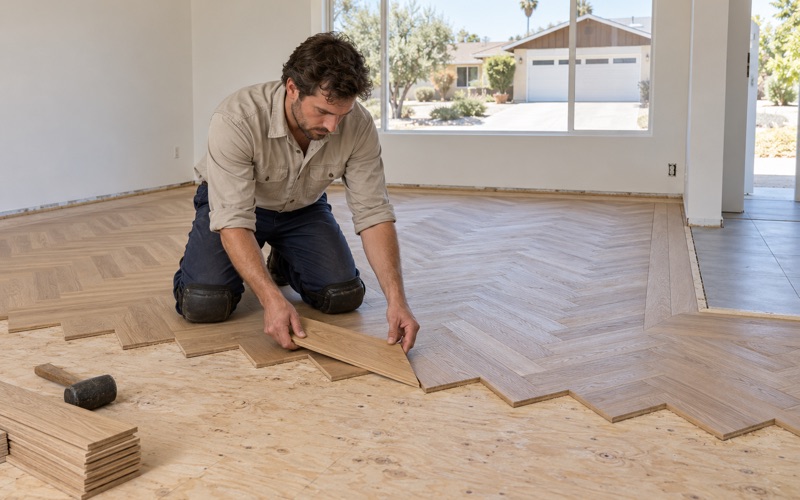
Because the occupancy agreement defines what a member may do inside the unit, we ask how the member reads it before we plan anything unusual, such as a herringbone pattern or a change in floor height at a doorway. A plain plank install is simpler, but it still follows the mutual’s process rather than a homeowner’s instinct.
Where the member carries the risk
The Village’s flooring registration language, under a heading on assumption of risk and responsibility for alterations, has the member accept sole responsibility for the risks of an alteration. That includes the cost of removing, altering, protecting or replacing the work if necessary to accommodate corporation business.
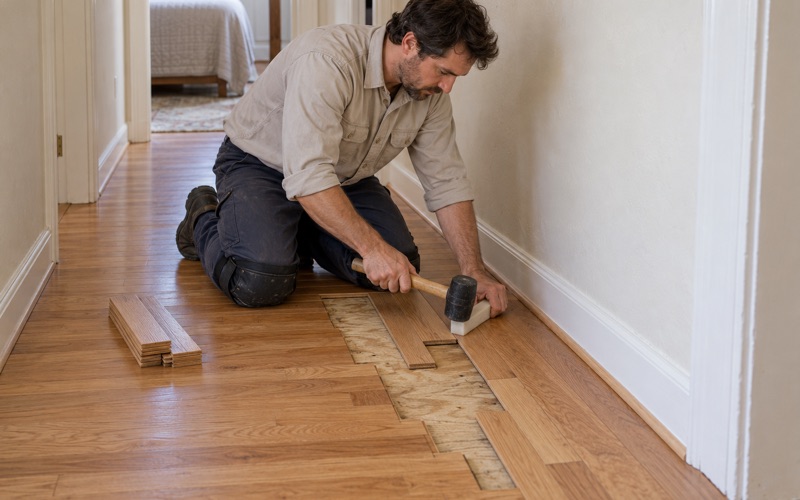
In plain terms, a new floor in a United manor may one day have to come up so the corporation can reach a pipe, a wall or a structural element, and the member bears that cost. We plan for it: adhesive choices are made with future removal in mind, spare boards are left for weave-in repair, and the member keeps a written record of product, lot and installation method.
Looking for wood-flooring closer to El Segundo? See El Segundo Wood-Flooring.
Co-op Manors and Condominium Manors Side by Side
Two large mutuals, two kinds of ownership
Laguna Woods Village, formerly Leisure World Laguna Hills, is organized into housing mutuals, and the two largest can look alike from the walkway. United Laguna Woods Mutual, with 6,323 memberships, is the cooperative. Third Laguna Hills Mutual, with 6,102 memberships, is a condominium, where the owner holds a deeded unit. VMS Inc. serves as managing agent for both.
The difference matters to a flooring contractor because it changes whose property the work touches. A Third Mutual owner is altering their own unit within the association’s standards. A United member is altering the corporation’s unit under an agreement to occupy it. The finished floor may look identical in both manors, yet the paperwork and the risk sit in different places.
Owner-builder rules differ
The Village FAQ draws a clear line. United Mutual does not allow owner-builder work and requires all work to be done by a licensed contractor. Third Mutual allows an owner-builder Mutual Consent only when labor and materials together come to less than $500. A wood floor rarely fits under that small ceiling anyway, but in United there is no such opening at all.
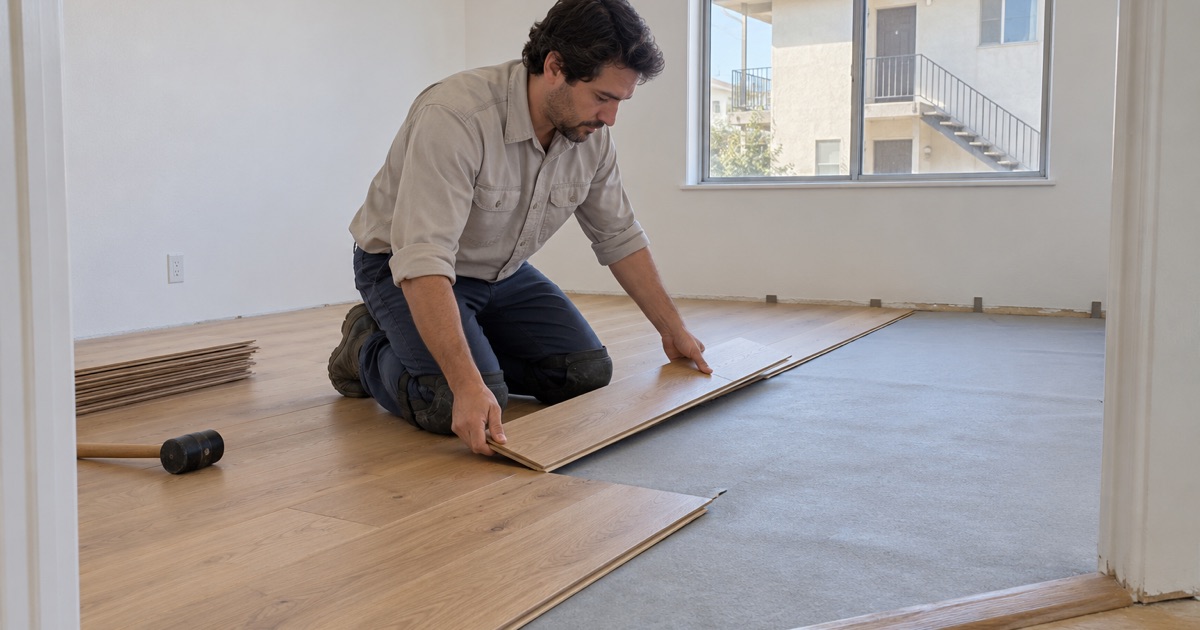
So a United member cannot hand a relative a flooring nailer and a free weekend. That rules out the familiar do-it-yourself click floor laid over old carpet pad, and it means the contractor the member hires is the one the mutual expects to see on the paperwork. Neither mutual publishes a vendor list, so choosing the installer stays with the member.
Why the difference changes our walk-through
On a first visit we ask which mutual the manor belongs to before we measure a single room. In a United manor our notes cover what the corporation may need to reach later, and the estimate assumes the mutual’s review. In a condominium manor we still follow the association’s rules, but the ownership conversation is shorter.
Changing a Floor Within the Mutual’s Process
Mutual Consent comes first
Mutual Consent, usually shortened to MC, is the HOA’s approval that a proposed alteration meets the mutual’s requirements. According to the Village FAQ, an approved MC is what the member takes to the City of Laguna Woods before work begins, and the city will not issue its permit without the approved MC application. The order runs one way: mutual first, then the city.
We build the calendar around that sequence. The member submits the alteration request with our product specifications, installation method and a tentative date, and tear-out does not start until approval is in hand. The City of Laguna Woods Building Division, at 24264 El Toro Road, is the office that handles the city side of any job.
Contractor-only work on site
Because United requires a licensed contractor for all work, the contractor’s name belongs on the request from the start, and the crew that arrives is the one named. We handle tear-out, disposal, subfloor repair and installation as one job rather than splitting it among trades the mutual has not seen.
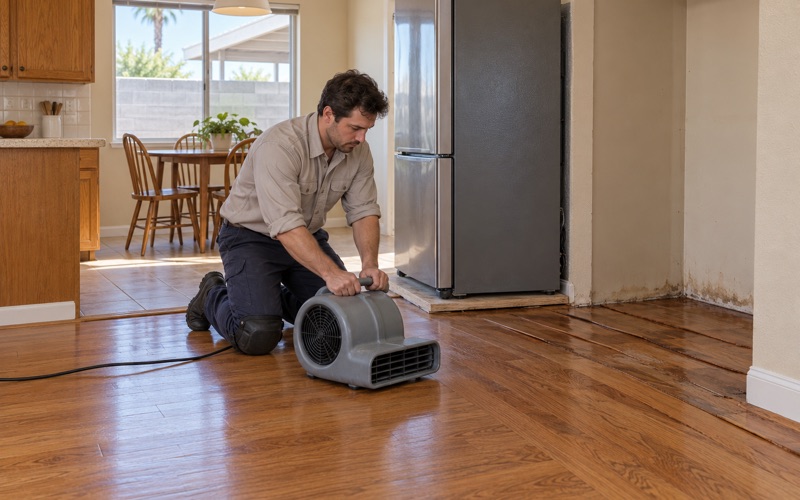
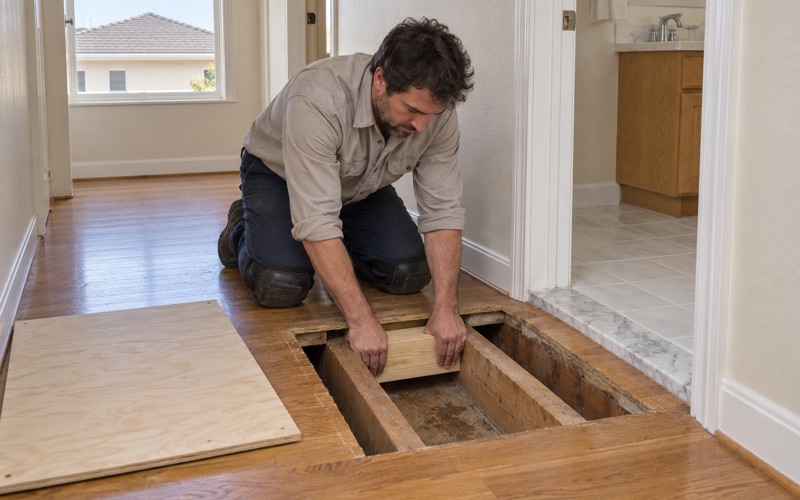
Soft spots near a toilet, a tub or a sliding door are traced to the subfloor before a finish floor is priced, because a manor this age can hide an old leak under carpet. If a dishwasher supply line or refrigerator water line caused the damage, drying comes first, with photos and moisture readings an insurance adjuster can use.
Village work hours
The Village sets contractor hours. Quiet work such as carpet installation may run Monday through Saturday from 7 a.m. to 5 p.m. Noisy work, anything involving power tools or cutting, is limited to Monday through Friday from 8 a.m. to 5 p.m. and Saturday from 9 a.m. to 5 p.m., with no work on Sundays or major holidays.
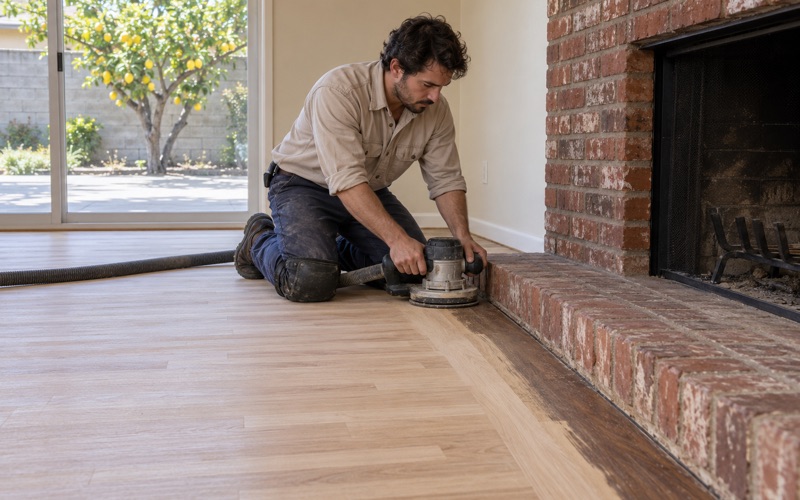
Sanding, sawing and pulling old flooring all count as noisy work, so we sequence the loud steps into weekday windows and save quieter tasks, like finish coats and shoe molding, for the edges of the day. Neighbors in attached manors hear a floor job regardless, and keeping to the posted hours is part of working in a shared building.
Floors in Manors Built in the 1960s and 1970s
What the housing record shows
Laguna Woods became Orange County’s 32nd city on March 24, 1999, and roughly ninety percent of the city is Laguna Woods Village, which received its first residents in 1964. Census estimates place 83.1 percent of the city’s housing units in the 1960 to 1979 range. Under carpet in a manor of that age, we expect layers from several decades, not a single floor.
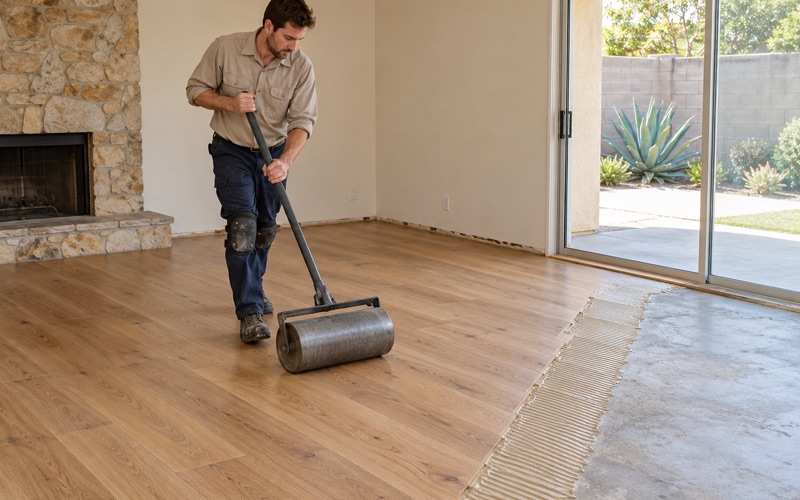
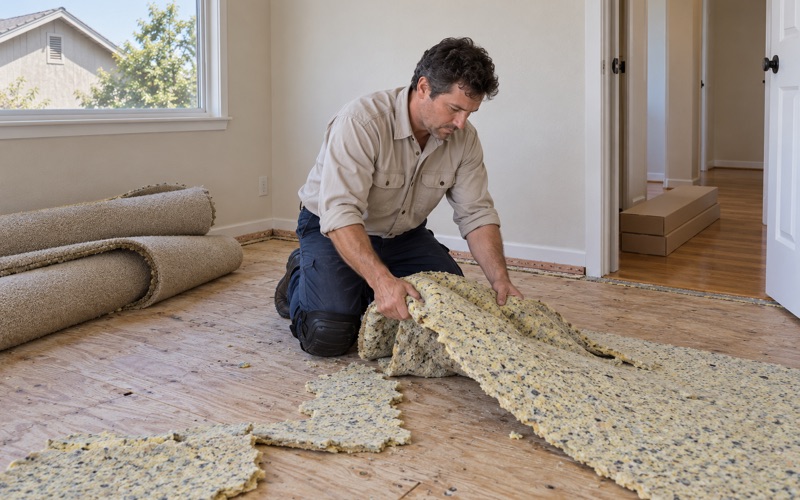
We lift a corner and check before quoting. What turns up decides the method: a concrete slab gets an ASTM F2170 in-situ relative humidity test or a calcium chloride test, written down before engineered wood is glued or floated. A plywood subfloor gets a wood moisture meter reading and a fastener check for squeaks.
Presumed asbestos in original materials
The Village requires original flooring materials to be presumed asbestos-containing, and its FAQ notes that the manors were built in the 1960s and 1970s with asbestos-containing materials. Old 9x9 asbestos floor tile and black mastic are exactly what wall-to-wall carpet can hide. We do not sand, scrape or grind any of it until that question is answered.
Testing and handling questions go to the City of Laguna Woods permits office at (949) 639-0500, and removal falls under South Coast AQMD Rule 1403. Where an asbestos survey supports leaving the old layers in place, a floating installation over the right underlayment can avoid disturbing them, which also limits how much of the corporation’s property the job touches.
Finishes and a schedule a household can live around
Laguna Woods sits inside the South Coast air basin, so any site-applied finish must meet SCAQMD Rule 1113 and its 275 g/L limit for wood coatings. In manors we usually recommend waterborne polyurethane or prefinished engineered wood, since both keep odor and dry time down in a closed unit where the occupant is often home throughout the job.
Every Village manor must have at least one occupant 55 or older under Civil Code section 51.3, and many members plan to stay put while the work happens. We hand over a written room-by-room plan and cure schedule showing when each room can be walked on in socks, when furniture can return, and when area rugs can go back down.
- 20+ Years in Wood Flooring
- Moisture Readings in Writing
- Room-by-Room Cure Schedule