Cypress Wood Flooring has spent more than 20 years on wood flooring, and in Lomita we plan the cleanup as carefully as the floor itself. A sanded floor leaves behind fine dust, a finish coat leaves applicator rinse water, and a strip-down leaves residue that has to go somewhere once the crew packs up. Where it goes is the part of the job most homeowners never see, so we spell it out before we start.
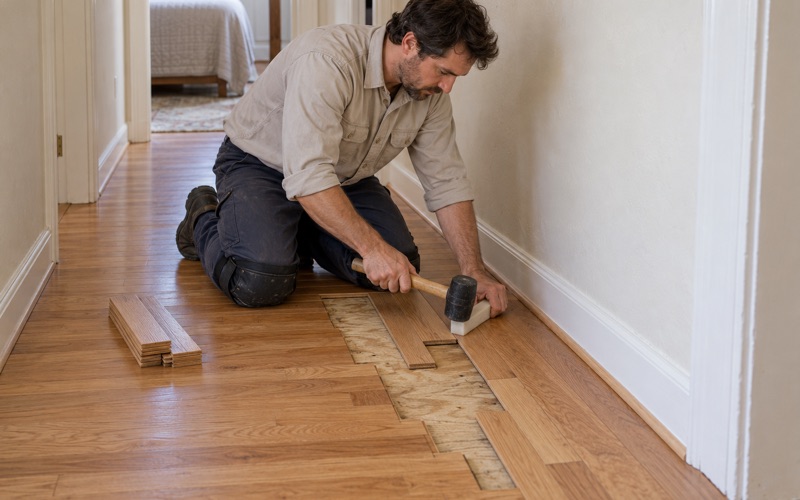
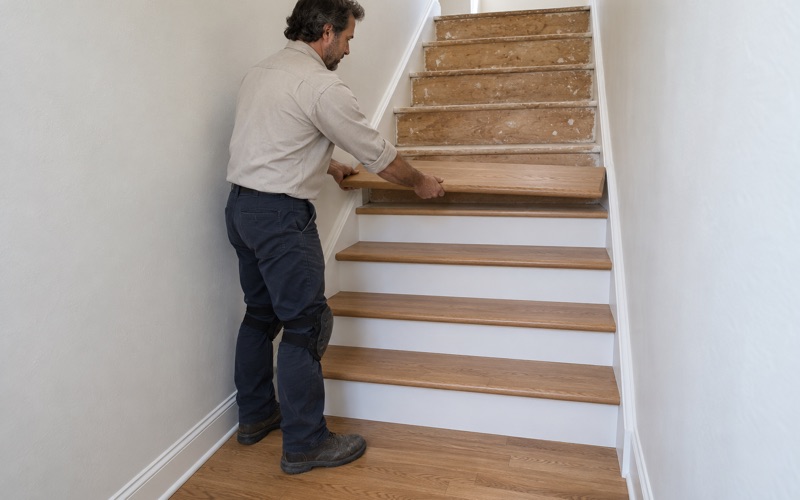
We refinish worn oak, install new hardwood and engineered floors, rebuild rooms after water damage and convert carpeted stairs to wood, priced per tread and riser rather than by the square foot. Each of those jobs produces waste, and none of ours is poured into the street, rinsed down a driveway or swept toward a catch basin.
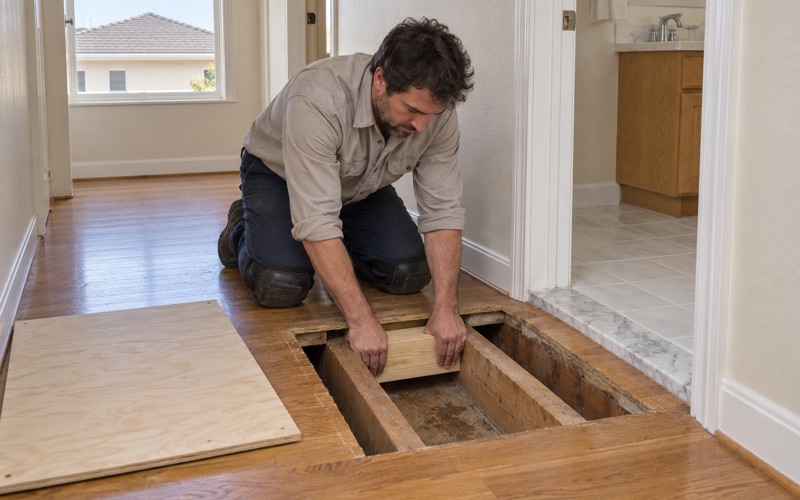
Before we quote, we check what sits under the existing floor covering, whether that turns out to be oak strip, plywood or concrete, and we test slabs for moisture and write the readings down. The same written plan that tells you when each room can be walked on also tells you how dust, rinse water and solvent rags leave the property.
Where Lomita’s Rain and Rinse Water Ends Up
A Storm Drain Network That Runs West to East
Stormwater in Lomita is collected by local catch basins, inlets and pipes and generally drains west to east through Los Angeles County storm drains toward the Wilmington Drain. That drain is a county flood control facility, and it empties into Machado Lake in Ken Malloy Harbor Regional Park, which serves the Wilmington and Harbor City areas.
Nothing along that route treats what flows into it. A bucket of cloudy rinse water dumped at a Lomita curb travels the same pipes as the rain, which is why we treat the gutter in front of a house here as the first stretch of a lake’s inflow rather than as a convenient place to empty a pail.
A Sub-Watershed of About 20 Square Miles
The Los Angeles Regional Water Quality Control Board’s nutrient TMDL document for Machado Lake places Lomita inside the lake’s sub-watershed, an area of roughly 20 square miles within the larger Dominguez Channel watershed. Several communities share that drainage area, and the Board names Lomita among the places whose runoff reaches the lake.
The same document estimates that about 88 percent of the watershed area flows through the Wilmington Drain into the lake. High-density single-family housing accounts for roughly 45 percent of land use in that watershed, so a large share of what reaches the water starts on residential streets and driveways like the ones we park beside.
What the Water Board Found at the Lake
The Board’s document says Machado Lake appeared on the 1998 and 2002 Clean Water Act 303(d) lists of impaired waters for eutrophic conditions, algae, ammonia and odors. It attributes the eutrophic, algae and odor problems to excess loading of nutrients, including nitrogen and phosphorus.
The lake was developed as part of Harbor Regional Park in 1971 and intended for boating and fishing. According to the same document, water quality declined over the years, boating was stopped and signs were posted warning of the risk of eating fish from the lake. The version we read is a 2008 revised draft, and we cite it only for the conditions it describes.
Looking for wood-flooring closer to Hermosa Beach? See Wood-Flooring Services in Hermosa Beach.
Floor-Job Waste and the Gutter
Why the Curb Is Not a Drain for Floor Waste
The City of Lomita is listed as a co-permittee under the Los Angeles County municipal stormwater permit for the Machado Lake sub-watershed. That permit program was designed to keep pollutants from being washed by runoff into the storm drain system, or from being discharged into it directly.
We do not quote code sections or penalties to customers, because our cleanup routine does not depend on them. We keep floor waste out of the gutter because the pipe at the end of the block leads toward an impaired lake, and a flooring crew working inside that watershed should behave accordingly.
What a Floor Job Actually Leaves Behind
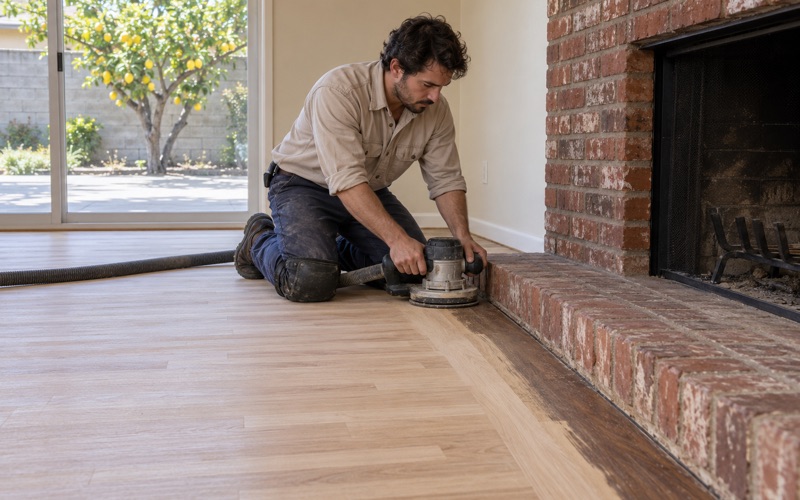
A full refinish produces three kinds of waste. Sanding dust from the drum sander, edger and orbital sander carries old finish and stain along with wood fiber. Rinse water comes from cleaning applicators, pads and buckets after a waterborne polyurethane coat, and removal work can add stripper residue or softened adhesive.
Each of those behaves differently once water touches it. Fine dust floats and travels, finish residue clouds a gutter stream, and solvent-based products do not belong in any drain at all. That is why we sort them on site through the day instead of treating cleanup as one wash-down at the end.
Older Houses, Older Finishes
About 78.9 percent of Lomita’s housing units were built before 1980, so a floor here can carry several layers of past finish, and some rooms still hold old resilient floor covering. In a pre-1980 house we treat 9x9 floor tile and black mastic as an asbestos question before anything is scraped or sanded, and we follow EPA Renovation, Repair and Painting practices in pre-1978 housing.
Those precautions matter on the water side too. Material that has to be bagged and handled after an asbestos survey or under lead-safe practices is exactly the material that must never be hosed toward a driveway, so the containment plan that starts inside the house continues all the way to the street.
Cleaning Up After Sanding and Finishing
Dust Captured at the Machine
We sand with a dustless sanding system connected to the drum sander and edger, which pulls most of the dust into a sealed collection bag instead of the air. Full bags are tied off and leave as solid waste. They are never emptied into a yard, a planter or a gutter where the next rain would carry the fines away.
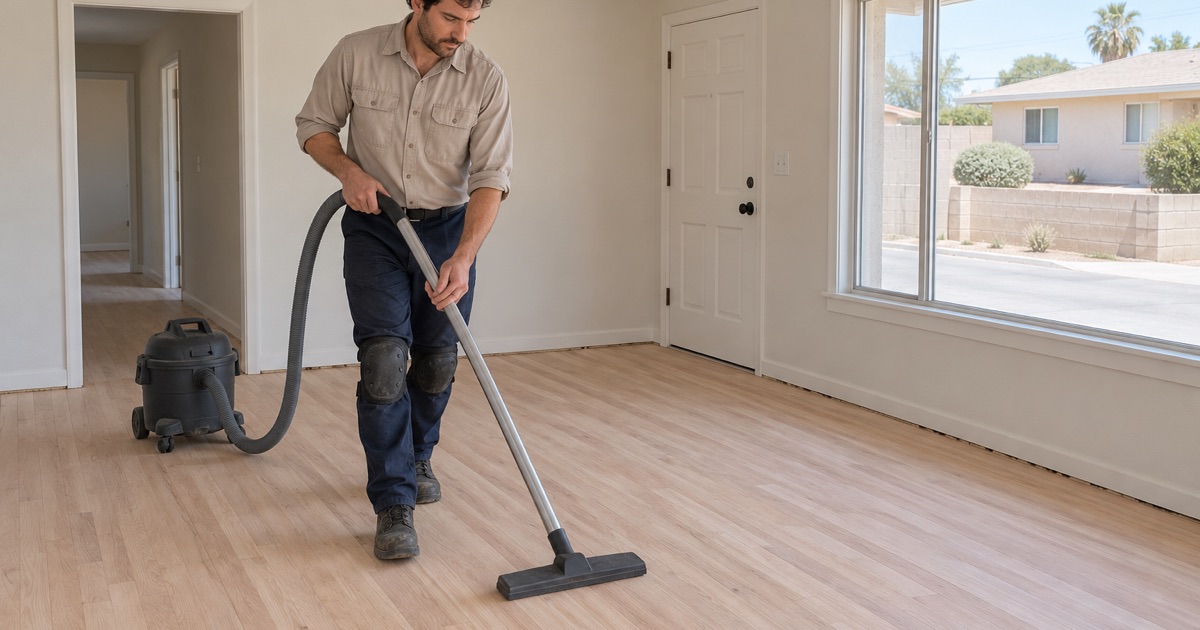
What the collector misses is cleaned up dry. We vacuum floors, sills and the work path between the garage and the rooms before any damp cloth comes out, because dust picked up dry now is dust that never becomes a gray slurry in a mop bucket later.
Rinse Water That Stays Out of the Street
Applicators and buckets used with waterborne polyurethane are cleaned into containers, not under a hose on the driveway. We let the solids settle and dry, dispose of the dried residue as solid waste, and send the remaining rinse water to an indoor sink that drains to the sanitary sewer rather than to a catch basin.
Oil-modified polyurethane and hardwax oil finishes clean up with solvents, which we contain and take with us. Rags used with oil-based products are a fire hazard as well as a water problem, so they are laid flat to dry or sealed in a metal container with water before they leave the house.
Stripper and Adhesive Residue
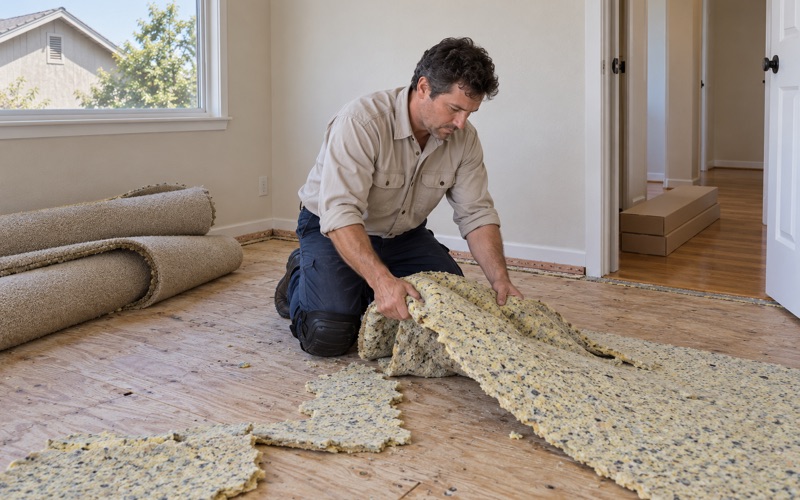
Adhesive removal under old carpet pad or vinyl can mean chemical stripper, scraped mastic and soiled rags. We collect it dry wherever we can, keep liquid residue in closed containers and take it away for proper disposal rather than washing tools in the yard. Where black mastic is involved, the asbestos question is settled first and the cleanup method follows from that answer.
Finish choice plays a part as well. We use coatings that meet the 275 g/L wood-coating VOC limit under SCAQMD Rule 1113, which keeps solvent emissions down inside the house and fits a cleanup routine built mostly around water-based products we can manage without solvents.
Planning a Floor Project in Lomita
Scheduling Around Rain and Moisture
The city offers sandbags to residents at City Hall to protect against flooding during heavy rainfall, a reminder that storms are something Lomita plans for. When rain is in the forecast we avoid staging dust bags, buckets or offcuts on driveways, and any outdoor cutting happens on a tarp so sawdust is collected rather than left for the first storm.
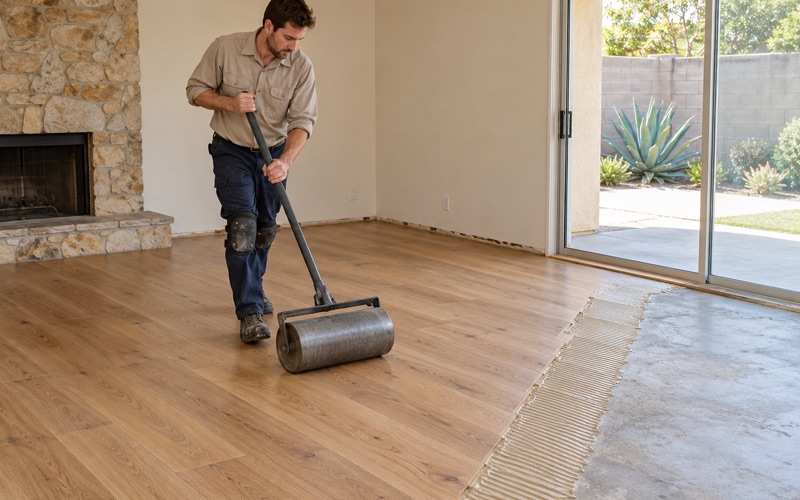
Moisture matters inside as well. We test concrete slabs with an ASTM F2170 in-situ relative humidity test or a calcium chloride moisture test before engineered wood goes down, check boards with a wood moisture meter during acclimation, and record every reading so the numbers are on file if a question comes up later.
Renters, Owners and Shared Buildings
Of Lomita’s occupied homes, 54.1 percent are renter-occupied, and 38.7 percent of its occupied detached houses are rented. Owners replacing floors between tenants often need a quick turnaround, and we keep the same dust and rinse routine on a fast rental job that we use on a slow custom one.
In condominiums and planned developments, the CC&Rs and the architectural review committee may set rules on flooring, work hours and where contractors stage equipment. We read those documents before the first board is cut, including any guidance on where trades may clean tools, because a shared driveway drains to the same system as a private one.
What You Get in Writing
Our Lomita estimates list what is under the current floor, the moisture readings, the finish we plan to use and a room-by-room cure schedule. They also say how dust, rinse water and removal debris will leave the property, so nobody is guessing at the end of the job.
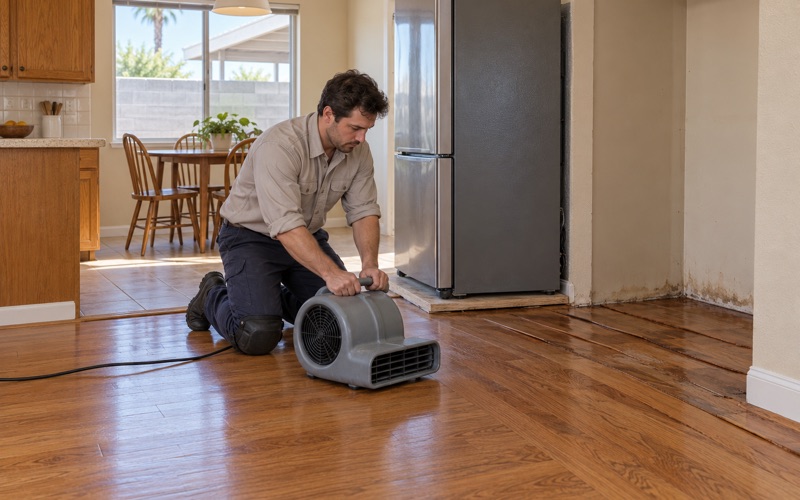
If a leak is what brought you to us, we rebuild after the plumber and the drying are finished, with photos and readings an insurance adjuster can use. Either way, the floor is done, the house is clean, and nothing from the job has been sent down the gutter toward Machado Lake.
- 20+ Years in Wood Flooring
- Moisture Readings in Writing
- Room-by-Room Cure Schedule