Cypress Wood Flooring has spent more than 20 years on wood-flooring in Long Beach and along the nearby coast, and much of that work happens in older houses where the floor is the one part of the building an owner fully controls. We refinish, repair and install hardwood, and every job starts with finding out what is actually under the carpet or the old finish.
That check matters more in an older city than in a newer suburb. A house from the 1920s or 1940s may hide oak strip under wall-to-wall carpet, a patched plywood subfloor from a later remodel, or several layers of resilient floor covering glued down over the decades. Each of those leads to a different plan, a different price and a different schedule.
We also hand over a room-by-room plan and a written cure schedule before the first machine arrives. A household that stays home through the work knows which rooms are open each day, when the finish can take foot traffic and when furniture can go back where it belongs.
Long Beach’s Historic Districts and Where Review Stops
Eighteen districts, designated over 37 years
Long Beach lists 18 designated historic districts. The earliest, Bluff Park, was designated on July 29, 1982, and the most recent, the Grant Neighborhood, on October 15, 2019. Between them sit names many owners know by street: Wrigley Area (1989), Carroll Park (1990), Hellman Street Craftsman (1992), Rose Park (1997), California Heights (August 29, 2000), Rose Park South (2001), Belmont Heights (2002), Eliot Lane (2003) and Bluff Heights (2004).
Those districts sit inside a city whose housing stock skews old overall. Census figures put 19.2 percent of Long Beach housing units in buildings from 1939 or earlier, and 52.3 percent from before 1960. A large share of the floors we see here, inside a district or outside one, have already been through several owners, several finishes and at least one round of carpet.
The line the city draws at the exterior
The city’s rule for these districts is firm on the outside of the building. Exterior changes to a historic landmark or to a property inside a historic district must be approved through a Certificate of Appropriateness before work starts, even if a building permit is not required. The city names common projects that need one: building repairs, additions, paint, re-roofing and solar panels.
The same city page is just as direct about the inside of the house. In its words, “interior alterations, ordinary maintenance and repairs with no physical exterior changes do not require historic review.” A refinish, a board repair or new wood laid across the rooms sits on that interior side of the line, as long as nothing about the job changes the outside of the building.
That sentence speaks to historic review and nothing else. Building and Safety questions for a particular job belong to the City of Long Beach Building & Safety Bureau, and we treat the two as separate matters rather than reading one answer into the other.
The annual notice district owners receive
Each year the Planning Bureau sends a notification to owners and residents of every property in a historic district or on a landmark site. The notice lists the benefits of that status, including eligibility for the Mills Act property tax program and flexible application of the building code for historic properties, and it restates the Certificate of Appropriateness requirement for exterior changes.
Owners sometimes read that notice and assume it reaches the floors as well. The notice and its postcard talk about repairs, additions, paint, re-roofing and solar, and interiors are not mentioned. The district governs the street face; the floors inside are the owner’s to restore.
Looking for wood-flooring closer to South Whittier? See South Whittier Wood-Flooring.
Floor Work Inside a District House
What turns up under older finishes
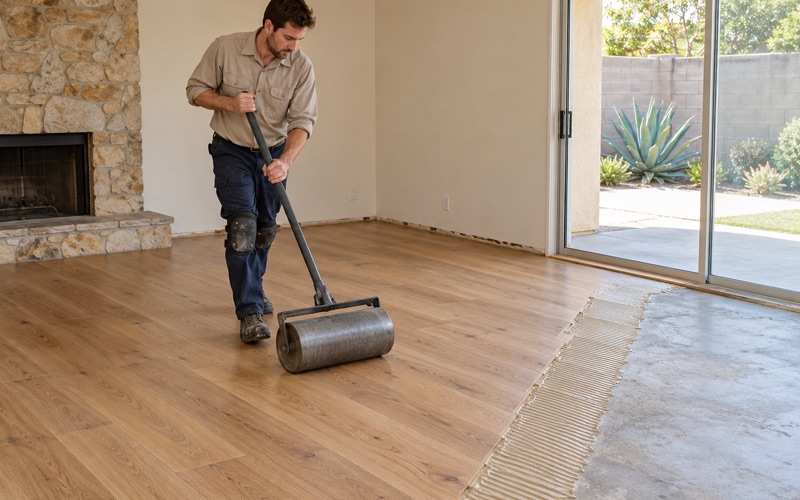
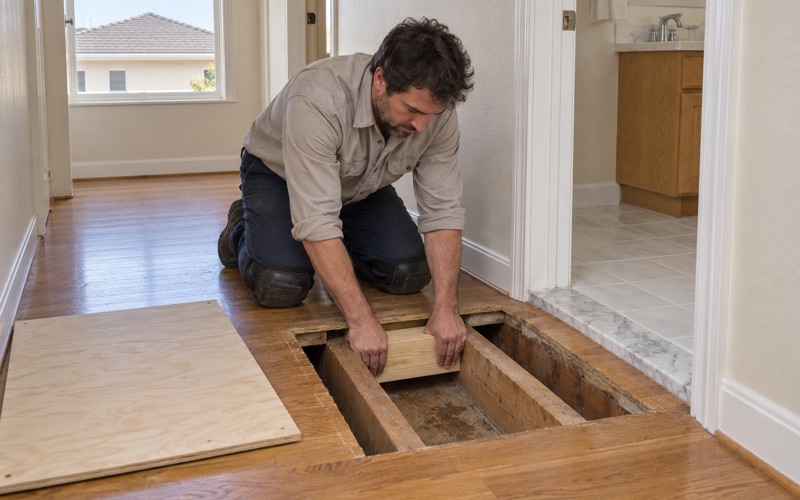
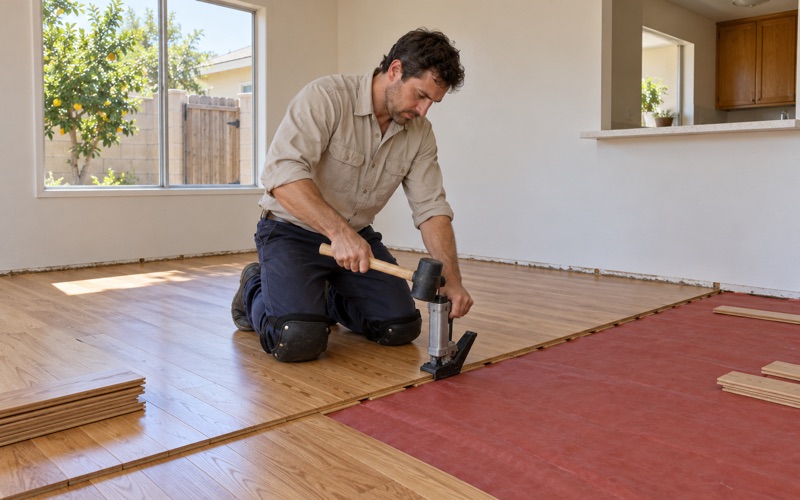
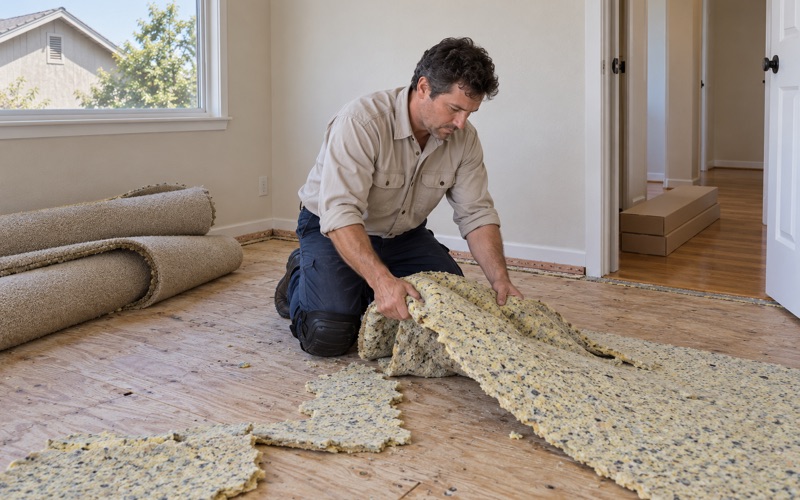
The first visit is an inspection, not a sales call. We pull back carpet at a closet or a corner, look at the tack strip and pad adhesive, and check the moisture content of any wood we find with a wood moisture meter. Where the floor turns out to be concrete, we test it with a calcium chloride moisture test or an ASTM F2170 in-situ relative humidity test before engineered wood goes near it, and we write the readings down.
Older houses often carry more than one layer. We find oak strip with an earlier finish gone orange, plywood patches where a wall once stood, and 9x9 tile or black mastic in kitchens and halls. What turns up decides whether the job is a sand and refinish, a targeted repair, or new flooring laid over a prepared subfloor.
Asbestos and lead come first in pre-1980 rooms
In a house built before 1980, old floor tile and black mastic are treated as an asbestos question before anything is sanded, scraped or covered. That can mean an asbestos survey and, where a material tests positive, handling under SCAQMD Rule 1403 rather than a quick pass with a floor scraper.
Houses built before 1978 get lead-safe work practices under the EPA Renovation, Repair and Painting rule. On a floor job that shapes how we contain the room, how we control dust at thresholds and baseboards, and how we clean before anyone in the family walks back in.
Refinishing versus replacing boards
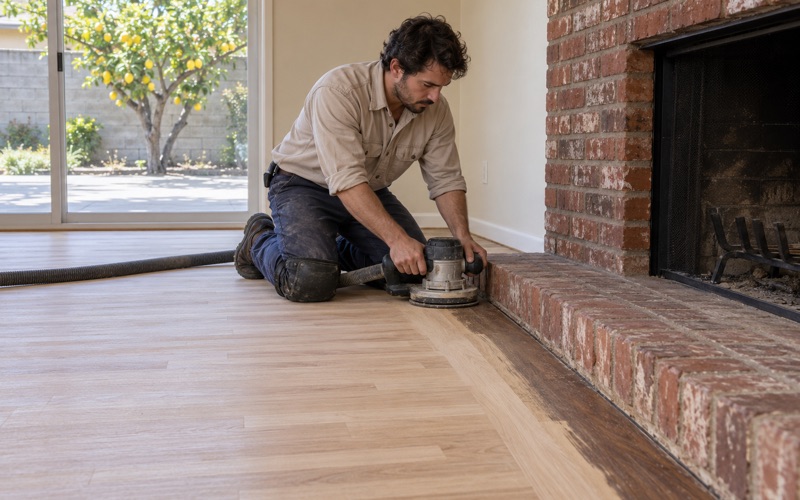
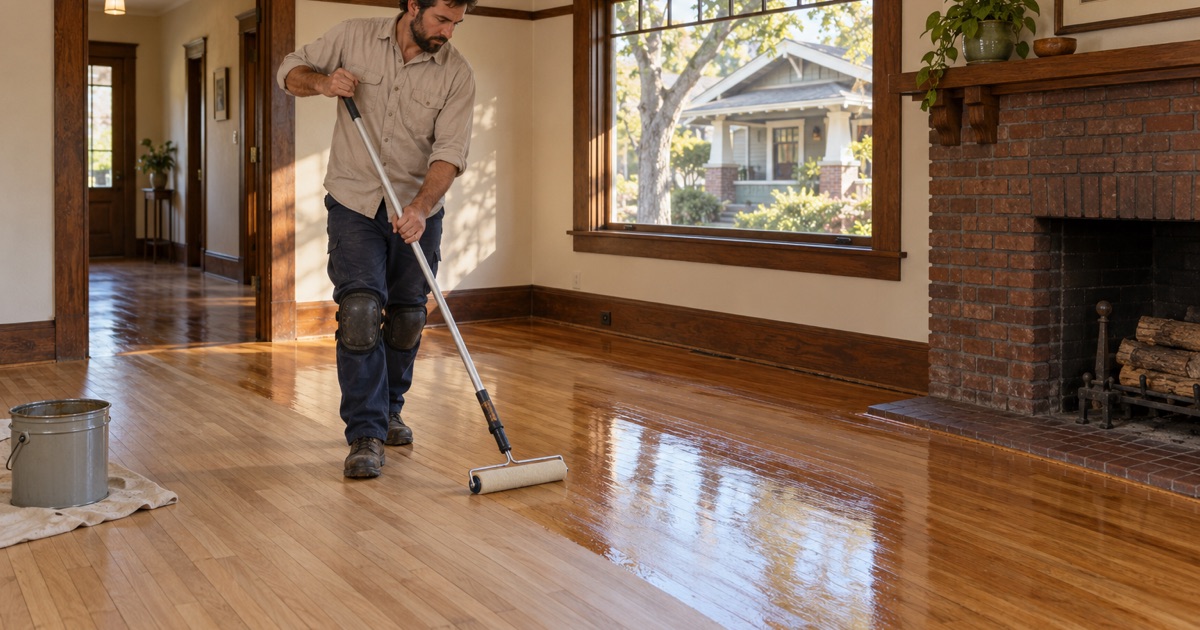
When the wood itself is sound, a full sand with a drum sander and edger, run through a proper grit sequence, brings the floor back to bare wood without touching anything outside the house. We use a dustless sanding system where the layout allows, which matters in a lived-in house full of furniture and finishes the owners want kept clean.
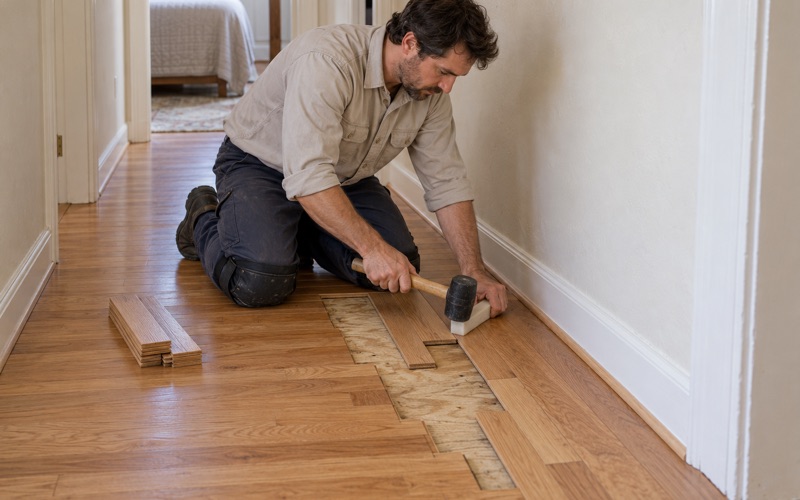
Damaged boards near a sliding door, a tub or a leaking refrigerator water line get a weave-in repair. We cut out the bad sections and lace new boards into the field so the joints stagger like the rest of the floor. Soft spots are traced to the subfloor first, because a new board over a failing floor joist or rotted plywood will move again.
Keeping Exterior Projects and Floor Projects Apart
When a renovation covers both sides of the wall
District owners often bundle work: new floors inside, plus a paint job, a new roof or a rebuilt porch outside. The exterior pieces go through the Certificate of Appropriateness process, reviewed by staff for minor work and by the Cultural Heritage Commission for major projects such as additions over 250 square feet and second stories. The city charges no fee for historic review of paint or re-roofing applications.
We keep our floor scope on its own sheet so it is clear everything in it sits inside the house. If a project also changes the outside, such as a new door opening, a replaced exterior threshold or a porch deck, that part belongs to the owner’s exterior application, and we schedule around it rather than folding it into the floor contract.
Sequencing around exterior crews
Order matters when both kinds of work are underway. We prefer final coats to go down after roofers, painters and anyone cutting through exterior walls are finished, because dust, ladders and propped-open doors are hard on a fresh finish. The written cure schedule tells the other trades exactly when the rooms are off limits.
The city notes that work done without a required Certificate of Appropriateness may bring fines and other penalties under the Municipal Code. That is one more reason to keep exterior paperwork with the owner and the right reviewers, and to keep our part of the project clearly inside the walls.
Restoring Older Floors in a Designated Neighborhood
Matching what is already there
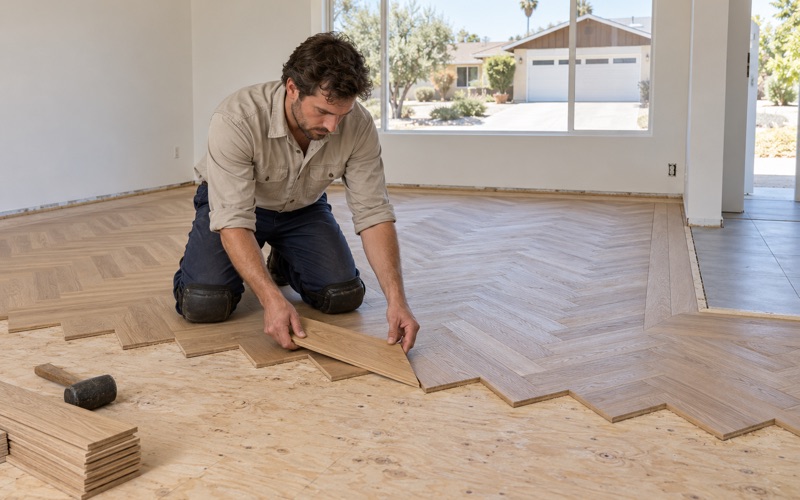
In an older house, owners usually want the floor to look like it belongs. We match species and board width where a repair meets an existing floor, whether that is red oak, white oak or another hardwood, and we sample stain on sanded boards before committing, since aged wood can turn blotchy or gray under the wrong color. Where a hallway meets a later addition, a reducer strip or T-molding handles the height change.
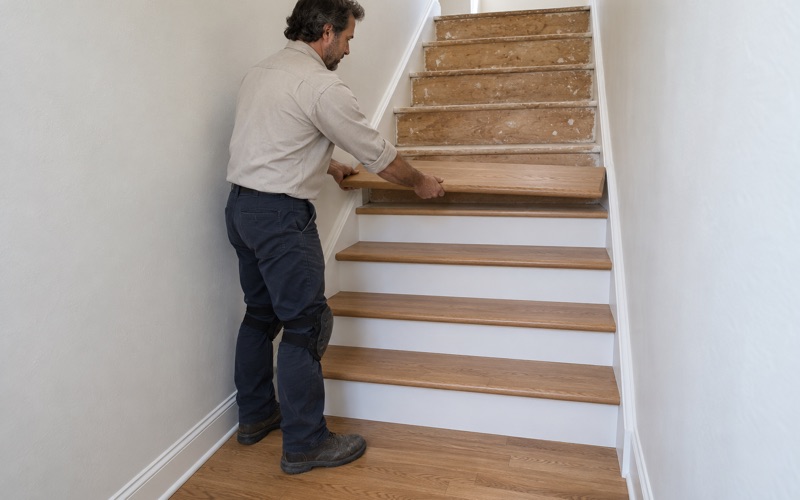
Stairs get the same attention. Carpeted stairs converted to hardwood are priced per tread and riser, with the stair nosing detailed to match the floor it lands on, instead of being rolled into a square-foot figure that hides the real labor.
Finishes for the South Coast air basin
Every finish we apply is chosen from products legal in the South Coast air basin under SCAQMD Rule 1113, which sets a 275 g/L VOC limit for wood coatings. That still leaves a real choice: waterborne polyurethane dries clear and fast, oil-modified polyurethane warms the tone of older oak, and a hardwax oil finish gives a low sheen that is easy to spot-repair.
Sheen level changes how an older floor reads. A satin or matte finish softens the small dents and board gaps that come with age, while a high gloss shows every one. We set sample boards in the room’s own light before the final coats go down.
Living in the house during the work
Plenty of owners stay home through a floor project. We plan the job room by room so a bedroom and the kitchen stay usable, and the written schedule says when each room can take socks, then shoes, then furniture.
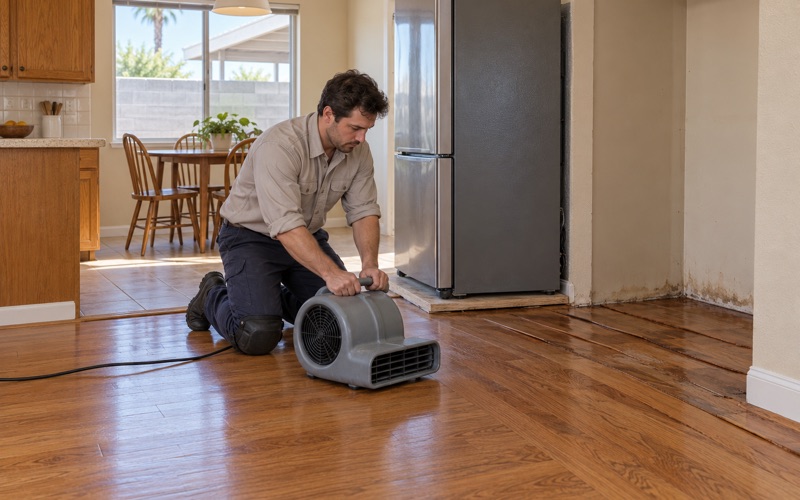
Water damage follows its own path. Where a dishwasher supply line, water heater or AC condensate line has soaked a floor, we rebuild after drying and document moisture readings and photos an insurance adjuster can use. The work stays inside the house, on the side of the line the owner controls.
- 20+ Years in Wood Flooring
- Moisture Readings in Writing
- Room-by-Room Cure Schedule