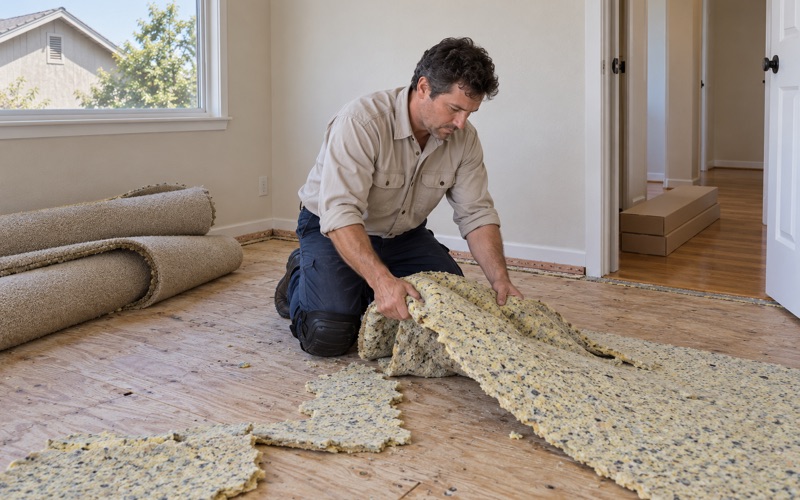
Cypress Wood Flooring has handled wood-flooring in Palos Verdes Estates for owners who are mid-purchase or freshly moved in, drawing on more than 20 years of sanding, installing and repairing floors. Much of the work here arrives with a sale attached. A buyer walks through during escrow, sees carpet in the bedrooms or a tired finish in the living room, and wants to know what the floors will take before the moving truck is booked.
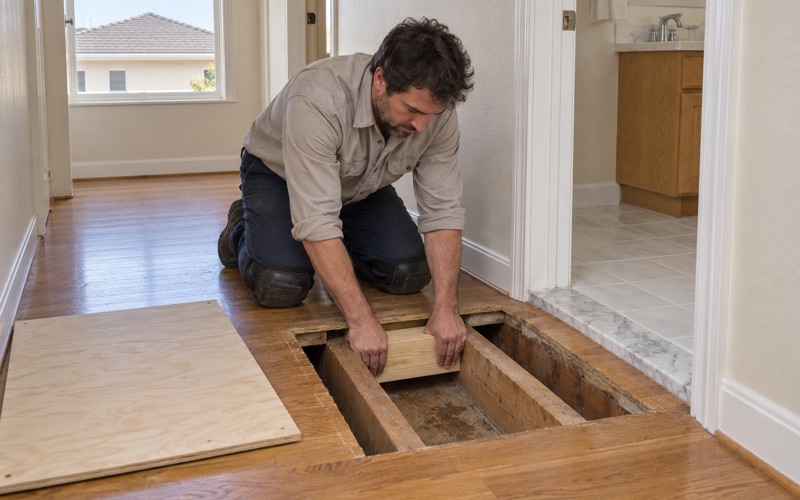
We look at what the floors actually are before we quote anything. That means lifting a carpet corner where the seller allows it, reading moisture content with a wood moisture meter, pressing on soft spots near baths and sliding doors, and noting whether an older finish has gone orange or started to peel. The result is a written scope a buyer can plan and negotiate around.
This page covers floor work around a purchase specifically: the inspection the Homes Association recommends to buyers, what that inspection looks at and what it leaves out, and how to time refinishing or new installation around move-in. The exterior review and the interior project run side by side, and keeping the two straight saves a new owner a lot of confusion.
The Completion and Compliance Inspection at Sale
Deed restrictions stay with the house
Properties in Palos Verdes Estates are subject to recorded deed restrictions, and the Palos Verdes Homes Association is responsible for enforcing them. The Association’s FAQ says the Basic Protective Restrictions were recorded in 1923. When a house changes hands, those restrictions do not reset, and the new owner takes the property as it stands, including anything built or altered without approval along the way.
That is why the Association speaks to prospective buyers directly. Its notice advises asking that the property be in compliance with the recorded deed restrictions and that this compliance be made a condition of purchase. A Completion and Compliance inspection is how that determination gets made, and a fee is charged to perform it. The notice ends with a plain line: “TAKE THE TIME TO CHECK BEFORE YOU BUY.”
What skipping it costs a buyer
The same notice is blunt about the alternative. A buyer who does not follow the recommendation assumes “all non-compliant conditions, as well as the obligation to correct any violation which may exist,” and As-Built fees are due for non-complying conditions. An unapproved patio cover or window change becomes the buyer’s problem to resolve after closing, not the seller’s.
Only the current homeowner, the listing agent or the escrow officer can order the inspection, so the usual move is asking the seller to order it on the property in escrow. The Association also states that the result does not affect escrow closing. The sale can close on schedule either way; what changes is who carries the correction work once the keys are handed over.
How flagged items get resolved
Once As-Built fees are paid, non-compliant items go to the weekly Art Jury meeting. The Association lists three outcomes: the item is accepted, it is accepted until the time of a future remodel, or it must be corrected within a given time period. That middle outcome matters to anyone planning a bigger project later, because a deferred item can come due exactly when the remodel does.
Looking for wood-flooring closer to Laguna Woods? See Wood-Flooring Services in Laguna Woods.
What the Inspection Photographs, and What It Skips
Exterior elevations and yards
The Association describes the inspection precisely. Photos are taken of all exterior elevations of the house and of the front, side and rear yards, and those photos are compared against the approved plans the Association keeps. Staff also read the historical minutes and the documents in the master file for the house. The whole exercise asks whether what stands outside matches what was approved.
The inside of the house is left to you
The same description adds, in parentheses, that “the inside of house is not inspected.” For a buyer, that line deserves a second reading. Nothing in the compliance process tells you whether the hallway boards are cupping, whether the kitchen floor sits over an old leak, or whether the bedroom carpet hides oak strip flooring or bare plywood. The floors fall outside it entirely.
A general home inspection may note visible damage, but it is not a floor assessment. That is the gap we fill. During escrow, with the seller’s permission, we check moisture content room by room, trace soft spots near toilets and tubs to the subfloor, and look at the edges where carpet meets tile. A buyer then budgets, or asks for a credit, with real information.
Reading an older floor’s condition
Housing age shapes what we expect to find. Census estimates show 52.0 percent of the city’s housing units were built between 1950 and 1969, which puts much of the stock well before 1980. Floors in houses from that stretch have often been refinished, carpeted over or partly replaced more than once, and the layers rarely match from one room to the next.
Where old resilient floor covering or 9x9 floor tile turns up with black mastic beneath it, we treat it as an asbestos question before anything is sanded, scraped or covered, and an asbestos survey comes before removal. In houses built before 1978, we follow lead-safe work practices under the EPA Renovation, Repair and Painting rule whenever the job disturbs painted trim or baseboards.
Floor Work Before or After Move-In
The empty-house window
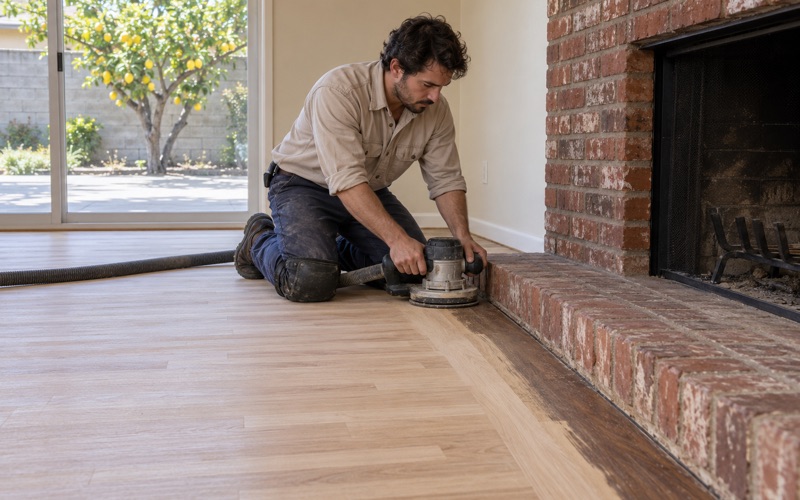
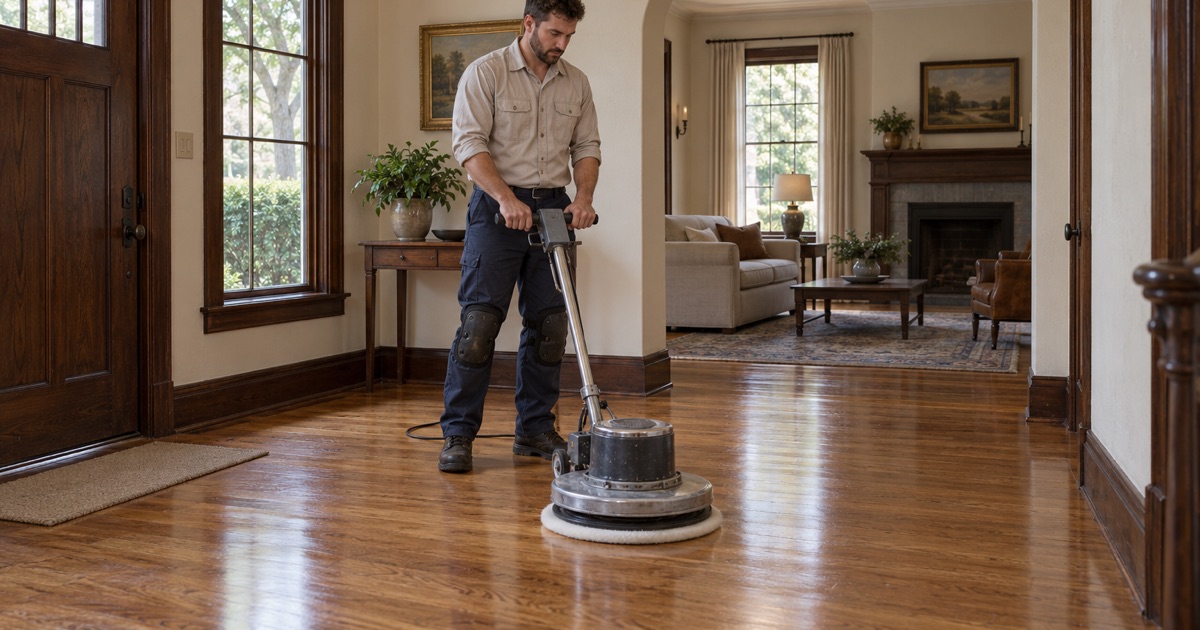
The easiest floor project is the one done in an empty house. Between closing and move-in, a full sand and refinish can run without furniture to shift, and the finish can cure without foot traffic. We write a cure schedule for each room, so the new owner knows which day the movers can bring in beds and which day area rugs can go down.
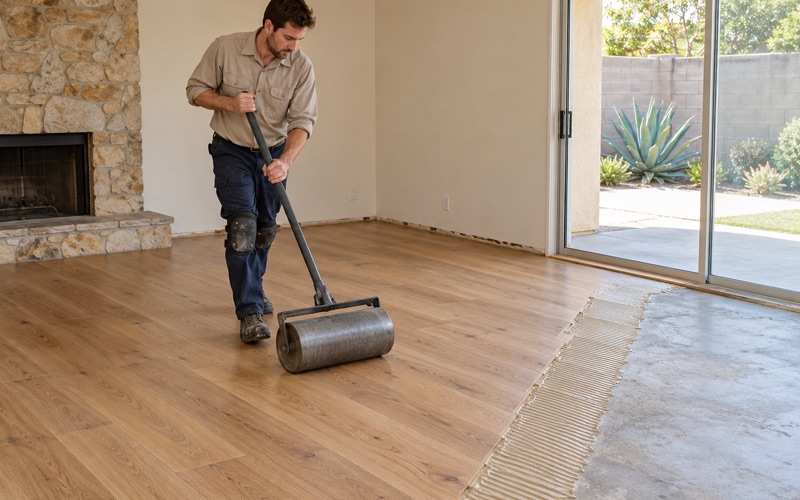
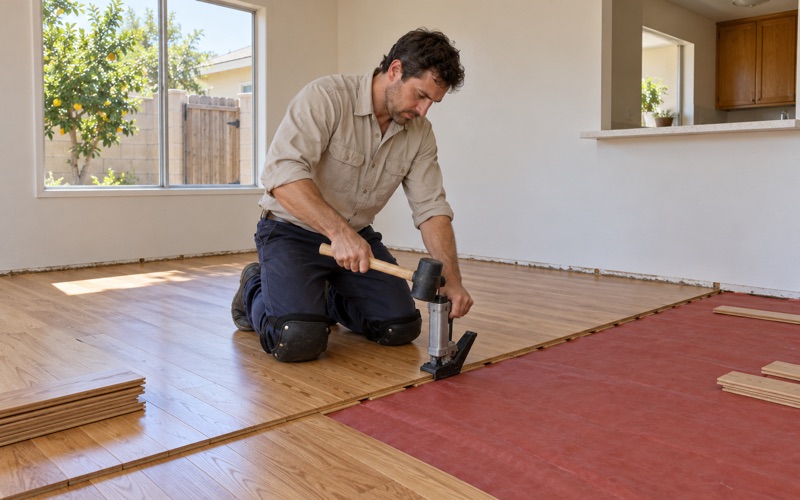
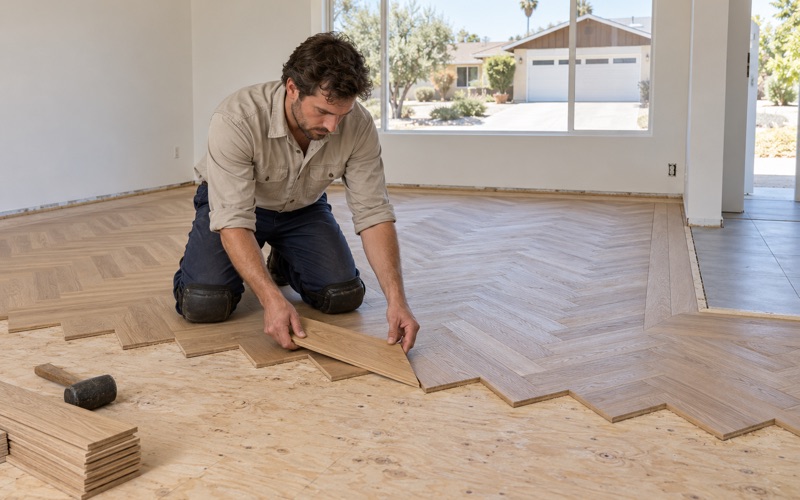
That window is usually short, so we plan it before closing where we can. New boards need acclimation time on site before a nail-down or glue-down installation, and moisture readings are written down before anything is fastened. Ordering material and booking the crew ahead of time keeps a two-week gap from stretching into a month of living out of boxes.
Living in the house during the work
Some owners move in first and do the floors later, often because the purchase stretched the budget. That works, but it takes a room-by-room plan. We sequence the job so the kitchen or a bedroom stays usable, run a dustless sanding system on site-finished floors, and give an older household a clear schedule of when each room can be walked on and furnished again.
Finish choice matters more when people are sleeping in the house. We use only products legal to apply in the South Coast air basin, where SCAQMD Rule 1113 holds wood coatings to a 275 g/L VOC limit. Waterborne polyurethane dries faster and smells less than an oil-modified finish, while a hardwax oil trades some durability for easy spot repair. We settle sheen level before the first coat.
Stairs, transitions and water damage
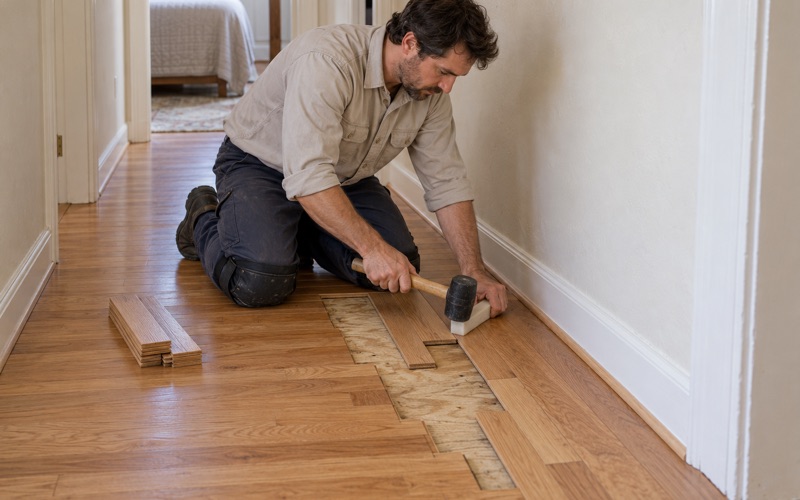
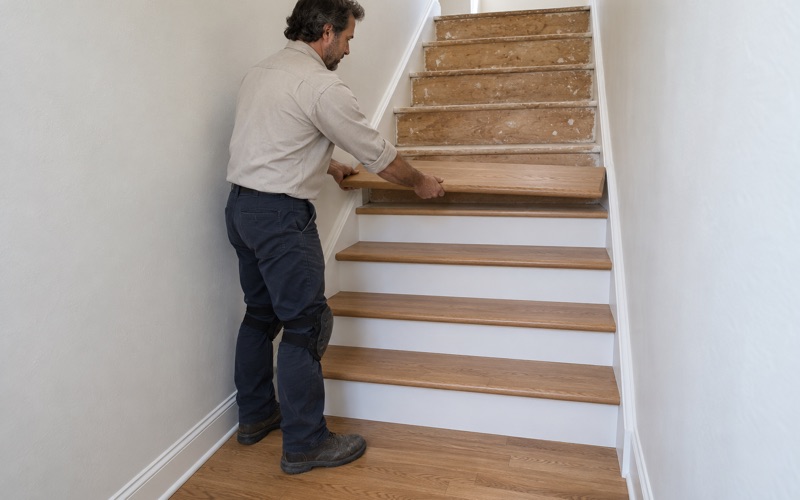
Carpeted stairs are a common first request after a purchase. We convert them to hardwood with new stair treads, risers and nosing, and we price that work per tread and riser instead of burying it in a square-foot figure. Where new wood meets tile or stone, reducer strips and T-molding are planned into the layout rather than added as an afterthought.
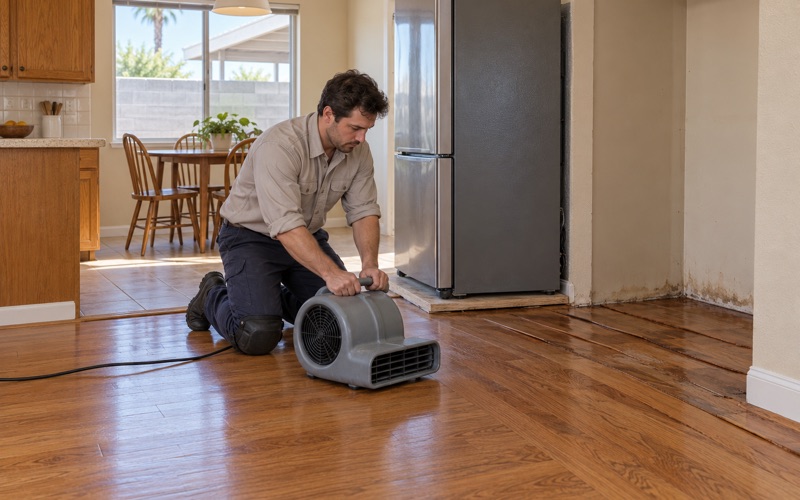
If the walkthrough turns up a floor ruined by a dishwasher supply line, refrigerator water line or AC condensate line, we rebuild it after the area is dried, with photos and moisture readings an insurance adjuster can use. Damage like that is easy to miss under a fresh coat of paint and staging furniture, which is one more reason to look before the sale closes.
Talking to the Homes Association Before a Larger Remodel
Two separate bodies to consult
The City of Palos Verdes Estates and the Palos Verdes Homes Association are separate governing entities, and their joint remodeling guide says both must be consulted when you plan to build or significantly remodel. The same guide encourages owners to consult Homes Association staff and Planning Department staff “when contemplating any change, no matter what scale.” We pass that advice straight on to every buyer we work with.
The guide also says the Art Jury reviews plans for all new houses and all changes to existing properties. It does not spell out how interior floor work is treated, and we do not guess on an owner’s behalf. When a floor project rides along with wider changes, such as moving a wall, altering a patio door or adding a room, a call to the Association office settles it before we schedule.
Fitting review timing to a floor schedule
The Association says the Art Jury meets Tuesdays to review smaller projects, while the Full Art Jury meets every other Monday for larger ones. If a new owner’s plans include exterior work alongside new floors, that calendar sets the pace. We schedule flooring to follow any work that sends dust or other trades through the house, rather than finishing boards that framers will then walk across.
Floors chosen for owners who stay
This is overwhelmingly a city of owned, detached houses: 89.7 percent of households own their home, and 97.3 percent of owner households live in a detached house. A buyer here is usually settling in for years, so we steer toward floors chosen for the long run, including a wear layer thick enough on engineered boards to allow refinishing later.
For a new owner, the practical order is simple. Ask for the Completion and Compliance inspection as a condition of purchase, have the floors assessed separately while you are still in escrow, and check with the Association and the city before any remodel wider than the floors. We handle the interior part of that list and keep a written record of it.
- 20+ Years in Wood Flooring
- Moisture Readings in Writing
- Room-by-Room Cure Schedule