
Cypress Wood Flooring has helped owners replace carpet with hardwood for more than 20 years in Cypress, CA, serving surrounding cities including Los Alamitos, Hawaiian Gardens, La Palma, Stanton and Buena Park. We remove worn carpet, find out what is underneath, and then either bring back the wood floor that is already there or install new solid or engineered hardwood.
The most important part of this job happens before any quote is written. In a 1960s or 1970s house, carpet can hide original oak strip flooring, a plain plywood subfloor or a bare concrete slab, and each one leads to a very different project and price. We check first, so the plan fits the floor you actually have.
Many of the owners we work with have lived in their homes for decades and are finally ready to trade stained or matted carpet for something easier to clean and longer lasting. Wood floors are easier to keep free of dust and allergens, and they can be renewed rather than replaced when they show wear.
What We Might Find Under the Carpet
Original Oak Strip Flooring
Some houses were built with oak strip flooring that was later covered with carpet. When that wood is still sound, it can often be sanded and refinished to look new, usually for less than the cost of a new floor. The carpet may even have protected it from sunlight and foot traffic for years.
We check thickness at a vent or edge, look for water stains, pet damage and termite signs, and estimate how much sanding it can take. Staple holes from the carpet pad and tack strip holes around the edges are normal, and we repair or fill them as part of the refinish.
Plywood Subfloor
Often the carpet sits on a plywood subfloor with no finished wood at all. That is a good base for new solid hardwood or engineered flooring, provided it is sound. We check for soft spots, especially near bathrooms, kitchens and sliding doors, and secure loose panels to the floor joists to prevent squeaks.
Where water has damaged the plywood, we replace those sections before the new floor goes in. Laying new wood over a weak subfloor only leads to flexing, squeaks and gaps later.
Concrete Slab
In houses built on a slab, lifting the carpet often reveals bare concrete, sometimes with old carpet pad adhesive, paint or patches. A slab can take a beautiful engineered wood floor, but it must be tested for moisture first. We use a calcium chloride moisture test or an ASTM F2170 in-situ relative humidity test and record the readings.
The slab is also cleaned and flattened. Adhesive residue is removed, high spots are ground and low spots filled, so the new floor bonds properly and sits flat.
Old Tile and Black Mastic
In some pre-1980 houses, carpet covers areas of old 9x9 floor tile or black mastic, especially in hallways or rooms that once had a hard floor. We never scrape, sand or grind these until an asbestos survey confirms what they contain, and any removal follows SCAQMD Rule 1403.
If the tile tests clear, it can be removed normally. If not, the options include professional abatement or, in some cases, installing the new floor over the old layer without disturbing it. We explain each choice and how it affects the schedule.
Choosing the New Floor
Refinish, Solid or Engineered
If good oak is already there, refinishing is usually the best value. Over plywood, both solid hardwood and engineered flooring work well. Over a slab, engineered hardwood is normally the right choice, because it is designed for glue-down or floating installation on concrete.
We walk you through the trade-offs of each option, including cost, appearance, how many times the floor can be refinished in the future and how long the installation takes, so the decision fits both your budget and how long you plan to stay in the house.
Species, Width and Finish
Red oak and white oak are the most common choices, with hickory and maple for higher hardness on the Janka hardness rating. Wider planks give a modern look, while narrower strips match the character of many older homes. We bring samples so you can see the options in your rooms.
For site-finished floors, we choose finishes legal in the South Coast air basin under the 275 g/L VOC limit of SCAQMD Rule 1113. Prefinished floors arrive with a factory finish and skip the sanding and cure time on site.
Bedrooms, Hallways and Stairs
Carpet replacement often covers bedrooms and hallways, and sometimes the stairs. Stairs are a separate job priced per tread and riser, and they can be done at the same time or later. Planning the whole house at the start keeps species, board direction and transitions consistent, even if the work is phased.
Doing the Work
Removing Carpet, Pad and Tack Strip
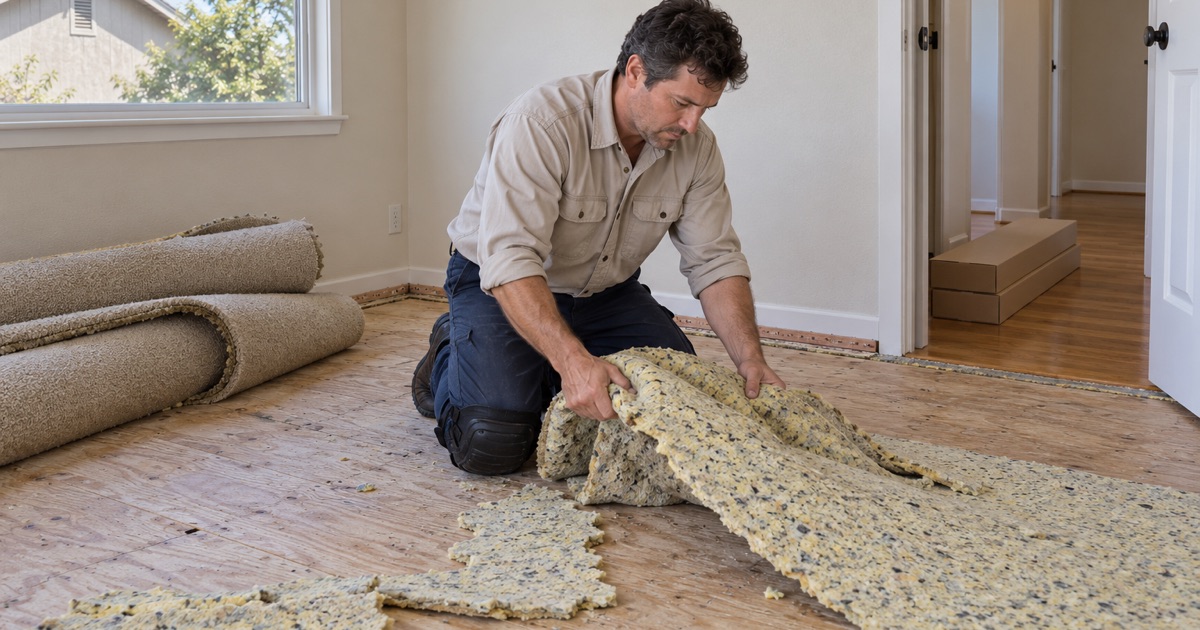
We remove the carpet, pad, carpet tack strip and every flooring staple, then scrape away pad adhesive. On a wood floor, this has to be done carefully so the boards are not gouged. The debris is hauled away, leaving a clean surface for inspection and the next step.
Transitions and Doorways
Carpet and pad are often thicker than hardwood, so the new floor may sit lower or higher than adjoining tile or vinyl. We measure every doorway and plan reducer strips, T-molding and thresholds so the transitions are smooth. Doors may need trimming to clear the new floor.
Baseboards are often reset or replaced when carpet is removed, since carpet was usually tucked under a gap at the bottom of the trim. We add shoe molding where needed to cover the expansion gap and give a finished edge.
Living at Home During the Work
Most owners stay in the house while we work. We plan the job room by room, keep a clear path to the kitchen and bathroom, and use dust containment. You receive a written schedule showing when each room can be walked on and when furniture can return.
Safe Work in Older Homes
Removing carpet usually means disturbing baseboards and trim. In pre-1978 housing, painted trim may contain lead, so we follow the lead-safe work practices of the EPA Renovation, Repair and Painting rule whenever painted surfaces are cut or sanded.
- 20+ Years in Wood Flooring
- Moisture Readings in Writing
- Room-by-Room Cure Schedule