
Cypress Wood Flooring has installed solid hardwood flooring for more than 20 years in Cypress, CA, serving surrounding cities including Los Alamitos, Hawaiian Gardens, La Palma, Stanton and Buena Park. We install solid oak, hickory and maple floors over sound wood subfloors, finished on site or prefinished at the factory, built to be sanded and renewed many times over.
Solid hardwood is a single piece of wood through its full thickness. That is its great strength: a well-installed solid floor can be refinished again and again as styles change or wear builds up. It is also why the subfloor, moisture and installation method matter so much, because solid wood moves with the seasons.
In many 1960s and 1970s houses, a new solid floor goes in over a plywood subfloor after old carpet or damaged boards have been removed. We check what is actually there first, since the answer decides whether solid wood is the right choice or whether engineered flooring will serve the room better.
Choosing a Species
Red Oak and White Oak
Red oak is the classic American floor, with a warm tone and strong grain that hides everyday wear. It takes stain evenly and suits the traditional look many longtime owners want. White oak is slightly harder, with a tighter, more subdued grain and a cooler color that works well with modern light and gray tones.
White oak is also more resistant to moisture because of its closed cell structure, and it takes reactive finishes and fumed looks well. Both are widely available in many widths and grades, which makes future repairs and board replacements easy to match.
Hickory and Maple
Hickory is among the hardest common domestic species on the Janka hardness rating, with dramatic color variation from pale to dark within a single board. It suits active households, pets and rustic styles. Maple is also very hard, with a smooth, fine grain and a light, even color.
Maple can take stain unevenly and look blotchy if not prepared carefully, so we often recommend a natural finish or a conditioner step when a stained look is wanted. Hickory’s strong character means sample boards are important, since two cartons can look quite different.
Width, Grade and Character
Strip flooring, typically narrow boards, gives the traditional look of many older homes. Wider planks feel more modern and open, but they move more with humidity and need careful acclimation and installation. Grade determines how many knots and color variations appear, from clean select grades to rustic grades with more character.
Installing Solid Hardwood Correctly
Subfloor Preparation
Solid hardwood is usually nailed to a plywood subfloor. Before installation, we check the plywood for soft spots, loose panels and moisture, and secure it to the floor joists so the finished floor does not squeak. Uneven areas are sanded or shimmed flat, since solid boards will follow any dips or humps underneath.
Where old flooring is removed, we pull carpet tack strip, flooring staples and old adhesive completely. In pre-1980 houses, any old 9x9 tile or black mastic is treated as an asbestos question and left undisturbed until tested.
Acclimation and Moisture
Wood must be close to the moisture content of the subfloor and the home before it goes down. We check both with a wood moisture meter and follow the manufacturer’s acclimation instructions and NWFA installation guidelines, rather than simply waiting a set number of days and hoping the numbers line up.
Skipping this step is one of the main causes of board gaps and cupping after installation. A floor installed too wet will shrink and gap, and one installed too dry can swell and cup when conditions change.
Nail-Down Installation and Expansion Gap
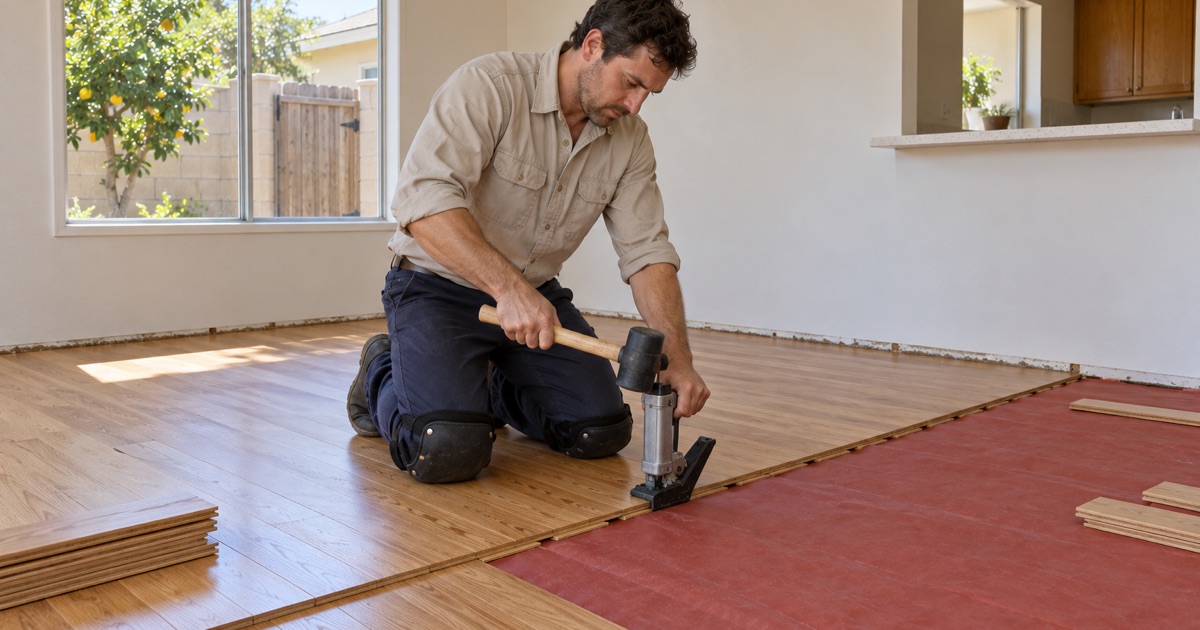
We fasten solid boards with cleat nails or flooring staples using a flooring nailer, spaced to the manufacturer’s schedule. Boards are racked out with staggered end joints so no pattern repeats and seams do not line up across the room.
An expansion gap is left around the perimeter so the floor can move with the seasons, then hidden under baseboard and shoe molding. Transitions into tile, carpet and other rooms use reducer strips or T-molding sized to the floor height.
Finishing Options
Site-Finished Hardwood
Site-finished hardwood is installed raw, then sanded flat through a grit sequence and finished in place. This allows a custom stain color, a perfectly flush surface and a finish that seals the seams between boards. It takes longer, with sanding and cure time before the room is fully back in use.
We choose finishes legal in the South Coast air basin under the 275 g/L VOC limit of SCAQMD Rule 1113, whether waterborne polyurethane, oil-modified polyurethane or a hardwax oil finish, and we help you pick a sheen level that suits how the room will be used.
Prefinished Solid Hardwood
Prefinished hardwood arrives with a factory-applied, fully cured finish, so the room can often be used soon after installation with no sanding dust or finish odor. Most prefinished boards have small beveled edges, which hide slight height differences between boards and give a more defined plank look.
Prefinished floors can be recoated later, and eventually sanded and refinished like any solid floor. Choosing between site-finished and prefinished often comes down to timing, the look you want and how much disruption the household can manage.
Solid Hardwood in Older Homes
Matching an Existing Floor
When a new solid floor continues from an existing one, we match species, width and thickness, then weave the new boards into the old. Sanding and finishing both together gives the most seamless result, so an addition or a remodeled room blends into the original floor.
Safe Work in Pre-1978 Houses
Installing a new floor often means removing and reinstalling baseboard and shoe molding. In pre-1978 housing, painted trim may contain lead, so we follow the lead-safe work practices of the EPA Renovation, Repair and Painting rule whenever it is disturbed.
- 20+ Years in Wood Flooring
- Moisture Readings in Writing
- Room-by-Room Cure Schedule